How the Digital Millennium Copyright Act (DMCA) Works

Hueco Tanks Lightening Storm by Dana Le from Flickr (Creative Commons License)

Hueco Tanks Lightening Storm by Dana Le from Flickr (Creative Commons License)

I got a message from a photographer friend who said a company is using many photographers’ work on their site without permission. He investigated the company’s copyright policy and was astonished that they make people provide six things to get an image removed. He sent me the link. Here’s what they require:

  1. Information reasonably sufficient to permit us to contact the complaining party (e.g., address, telephone number and email address);
  2. A physical or electronic signature of the person authorized to act on behalf of the owner of the copyrighted work(s) that is/are alleged to have been infringed;
  3. An identification of the copyrighted work(s) you claim is/are being infringed or, if multiple copyrighted works at a single online site are covered by a single notification, a representative list of such works at that site;
  4. Identification of the material that is claimed to be infringing or to be the subject of infringing activity, and information reasonably sufficient to permit us to locate the material;
  5. A statement that the complaining party has a good faith belief that use of the material is unauthorized; and
  6. A statement that the information in the notification is accurate, and under penalty of perjury, that the complaining party is authorized to act on behalf of the owner of an exclusive right that is allegedly infringed.

When I saw the list, I smiled. This is how the Digital Millennium Copyright Act (DMCA) works. When you send a DMCA takedown notice, you have to tell the web host who you are, which of your photos is being used, where they can find the image on the alleged copyright infringer’s site, and you have to promise that you’re telling the truth. If you provide this information, they are required to remove the image from the alleged infringer’s site.

This is what disturbs me about this situation. This company uses many images on its site. As an outsider looking in, it appears that they at least suspect that infringement is happening and their way to dealing with it to remove the infringing images when they’re notified. I would not be surprised to learn that this company outsources their content creation so they wouldn’t know if their use of an image was violating someone’s copyright. I hope they have a policy to fire contractors with a track record of copyright infringement.

Sending a DMCA takedown notice is only one option when a photographer suspects their work is being used without permission. Some photographers opt to send a bill or file a lawsuit against them instead.

If you want a resource that explains the legalities of copyright and social media in plain English, I recommend my book, The Legal Side of Blogging: How Not to get Sued, Fired, Arrested, or Killed. If you want to chat more about this topic, feel free to connect with me on TwitterFacebookYouTubeLinkedIn, or you can email me. You can also subscribe to the Carter Law Firm newsletter.
Please visit my homepage for more information about Carter Law Firm.
Copyright FAQs

Large Copyright Graffiti Sign on Cream Colored Wall by Horia Varlan from Flickr (Creative Commons License)

Large Copyright Graffiti Sign on Cream Colored Wall by Horia Varlan from Flickr (Creative Commons License)

When I speak, I often refer to previous blog posts as potential resources for attendees. I frequently talk about copyright issues and I realized I haven’t written a post about copyright basics. So let me fix that.

What is Copyright?
The copyright law gives you rights to your original work. Your work may be comprised of text, drawings, photographs, video, sculpture, music, etc. When you create something, you have the right to control where your work is copied, distributed, displayed, performed, and what derivative works can be made from it.

What’s a Derivative Work?

When Do You Get Copyright Rights?
You get your copyright rights the moment your work is fixed in any tangible medium. It has to be a work you’ve created, not just an idea in your head. You do not have to register your work with the U.S. Copyright Office or even put a copyright notice on your work (“©[YEAR] [YOUR NAME]”) to get your rights.

How Long Does Copyright Last?
For all works created on or after January 1, 1978, the duration of copyright is as followed:

  • For work created by an individual: Life of the author + 70 years
  • For work created by a company: 120 years from the date of creation

After this time period, the work become part of the public domain and anyone can use it for any purpose without needing the copyright owner’s permission. The owner of a copyright can give up their rights to their work at any time by releasing it into the public domain. If they release a work into the public domain, they can never reclaim their copyright rights.

What’s the Difference Between Copyright and Trademark?

What’s the Benefit of Registering a Copyright with the Copyright Office?
There are two main benefits for registering your copyright with the U.S. Copyright Office:

  1. It is strong evidence that you actually own what you claim you own.
  2. You cannot sue for copyright infringement unless you register your work with the Copyright Office.

If you want to be in a position where you can sue for copyright infringement when someone steals your work, talk to a copyright attorney about your copyright strategy. There are many ways to protect your work. This is where the law can get really complicated and you want to make sure you’ve set yourself up for your desired outcome.

How Do You Register Your Work with the Copyright Office?
You can register your work on the Copyright Office’s website. You’ll need to fill out the form, upload a copy of your work, and pay a filing fee. The filing fee for a single work is $35-55. You can do this yourself, but the Copyright Office’s website is not very user-friendly.  I recommend at least hiring an attorney to walk you through the process the first time.

Legal Side of Blogging Book CoverIf you want to do it all yourself, allot at least 2-3 hour to get through it the first time. And you might want to have an adult beverage on ice as a reward at the end of the process.

To put it in context, it took me an hour the first time I registered my own work and I knew what I was doing. (I have a certificate in intellectual property in addition to my law degree.) Now, I can submit an application to register a copyright in under 30 minutes most of the time.

I hope this has been helpful. If you have questions about how copyright works in terms of the internet, social media, and /or blogging, please check out my book, The Legal Side of Blogging: How Not to get Sued, Fired, Arrested, or Killed. Approximately half the book addresses copyright issues.

If you want to talk more about copyright, feel free to connect with me on TwitterFacebookYouTubeLinkedIn, or you can email me. You can also subscribe to the Carter Law Firm newsletter.
Please visit my homepage for more information about Carter Law Firm.
U.S. Copyright Office is Raising its Filing Fees on May 1, 2014

Burning Nature by Vinoth Chandar from Flickr (Creative Commons License)

Burning Nature by Vinoth Chandar from Flickr (Creative Commons License)

Last week, the U.S. Copyright Office announced that it is raising its fees to register your work. Effective May 1, 2014, the cost to register a single work or a collection of works using their online system will go up from $35.00 to $55.00 per application. For those of you who are old school and prefer to register your work by mail, the fee will go up from $65 to $85.

So if you have projects that you were planning on registering with the Copyright Office, now would be a really good time to get them done.  You only have to get your application in before May 1st; it may take the Copyright office until after May 1st to process it.

There is one piece of good news in the fee hike announcement. The U.S. Copyright made an exception for individuals who are registering single works that are not “works made for hire.” If you are a photographer, writer, or some other artist and you want to register you works individually, your filing fee will remain at $35 per application.

I had a question about this exception because I know many artists who create a lot of works that are not works made for hire, but they do it under an LLC for liability and tax purposes.  I called the Copyright Office and they confirmed that you only qualify for the $35 fee if you register as an individual person. If you register your work under your business name, you have to pay $55 per application, even if you are the only person in the business.

Heart in Pages by Vincent Lock from Flickr (Creative Commons License)

Heart in Pages by Vincent Lock from Flickr (Creative Commons License)

The only things that are changing on May 1st are the Copyright Office’s fees. The rest of the copyright laws have remained the same.

To qualify for a copyright, you need an original work of authorship that is fixed in any tangible medium. When you have a copyright, you have the exclusive right to control where your work is copied, distributed, displayed, performed, and what derivative works can be made from it. You get these rights the moment your work is created, even if you never register it with the Copyright Office and even if you don’t put a copyright notice on your work – i.e. “© [Copyright Owner’s Name] [Year].”  If you register your work, your registration provides the presumption of ownership and validity of your copyright rights. If you ever want to sue for copyright infringement when someone steals your work, you must register your work with the U.S. Copyright Office first.

If you want to talk more about copyright, copyright registration, or intellectual property strategy, connect with me on TwitterFacebookYouTubeLinkedIn, or you can email me. If you post your original work online, I strongly recommend you check out the many chapters on copyrights in my books:

Please subscribe to the Carter Law Firm newsletter and visit my homepage for more information about Carter Law Firm.

To Watermark or Not To Watermark

How to Create a Watermark in Photoshop by Michele M. F. from Flickr (Creative Commons License)

How to Create a Watermark in Photoshop by Michele M. F. from Flickr (Creative Commons License)

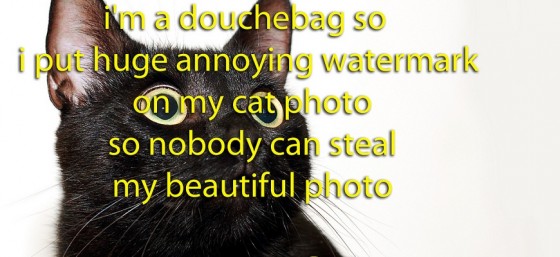
I was recently asked to talk about whether there are benefits to putting a watermark on your photos before posting them on the Internet. Is it worth the extra effort? Do they really prevent people from stealing your work?

Like all legal questions, the answer is, “It depends.” But let’s look at it.

When you take a photograph, you have copyright rights in your work the second the image is put on film or saved in your camera. You have the exclusive right to copy, distribute, display, and make derivative works from your picture, even if you don’t register it with the U.S. Copyright Office  or put the © [Your Name] [Year] on it. If you want to sue for copyright infringement if someone steals your work, you have to register your work and if that’s the case you should consult a lawyer to determine the best copyright protection strategy for your work.

I look at watermarks similarly to home security. Your home doesn’t have to be fortress; it just has to be less appealing than the other houses on the block. A watermark makes your photo less appealing to potential infringers who can probably find (and possibly steal) a similar image elsewhere that doesn’t come with a watermark.

For people who understand copyright, a watermark is a visual reminder that they don’t own the image and they should contact you if there’s an image they really want to use. The problem with watermarks is they can obscure the image itself and interfere with people’s ability to enjoy the image which was the purpose of posting it online in the first place.

You could try to avoid this problem by putting the watermark in the corner so it doesn’t obstruct the image, but then you open yourself up to the possibility that someone will steal you work and crop off the watermark before using it. If an infringer does this, it is a separate additional penalty to copyright infringement. If you sued the infringer you could ask for damages for the infringement which can be up to $150K if you qualify for statutory damages and up to an additional $25K for removing or altering the “copyright management information.

So, should you take the time to put watermarks on your photos? It’s your call. You can deter potential infringers with watermarks and/or using software that prevents them from downloading your images from your website. But if someone is dead set on stealing your work, there’s probably nothing you can do to completely stop them. The questions then become how much energy are you willing to put into prevention and how do you want to respond if someone steals your work. How you want the situation to be resolved usually tells you what you have to do on the front end to set yourself up for the desired outcome.

If you want to chat with me more about this topic, you can connected with me on TwitterGoogle+FacebookYouTubeLinkedIn, or you can email me. I’m also available to speak at events on Copyright for Creatives.
You can also subscribe to the Carter Law Firm newsletter.
Please visit my homepage for more information about Carter Law Firm.
The Legal Side of Revenge Porn

Untitled by seanmcgrath from Flickr (Creative Commons License)

Untitled by seanmcgrath from Flickr (Creative Commons License)

One of the downsides of technology is most people have the ability to create intimate photos and videos with their smartphones which is now leading to an increase in “revenge porn.” For those of you who don’t know, revenge porn is created when a person takes the photos or videos from their prior romantic relationship and posts them on the internet to humiliate their ex-partner. I think posting revenge porn is juvenile and disrespectful, but there are also legal implications in these situations.

Copyright Infringement
If you take an intimate photo of yourself and send it to your partner, you own the copyright in that image and therefore have the exclusive right to copy and distribute it. If your ex posts it on a website or shares it with someone without your permission, they are likely committing copyright infringement.  If you find a “selfie” photo of yourself on the internet that was posted without your consent, you may be able to get it removed using the Digital Millennium Copyright Act by sending a takedown notice.

Cyberharassment
Arizona has state laws against cyberharassment and against harassing someone via electronic communications, both of which are punishable by up to six months in jail and up to $2,500 fine. Other states have similar laws. If the person who posted the photos or videos did it with the intent to harass or harm you, the poster may have violated one or both of these laws.

Invasion of Privacy and other Civil Violations
Some people who are victims of a revenge porn situation are interested in a civil lawsuit. They may want to consult a lawyer to determine if the person who posted the pictures or videos likely violated your state’s laws related to invasion of privacy, infliction of emotional distress, and, if they’re making money off of you, the commercialization of your image. These are state law issues so you’d have to have a lawyer compare the facts of your case against your state’s laws.

Challenges in these Cases
One of the challenges in these cases is proving that your ex was the person who posted the photos or videos. The IP address will tell us from where they were posted so if they posted from home, that’s a good indicator that your ex did it. However, some people try to cover their tracks by using public Wi-Fi but there are other ways to gather evidence about the person who posted your intimate photos on the internet to discern their identity. There is always a chance that your ex isn’t the perpetrator but someone he/she shared your photos with (which could be another case against your ex)or a person who got access to your ex’s phone or computer without consent.

Another challenge in these cases is for people pursuing a civil lawsuit, you may win the case by you might not be able to collect if the defendant doesn’t have any money. The defendant doesn’t have any money, you might have a hard time finding a lawyer who will take your case unless you pay for your legal fees.

If you want to watch me jump on my soapbox about revenge porn, I made a video about it earlier this year.

If you are in a revenge porn situation, talk with the police and a lawyer who can discuss all your options. If you want more information about what you can/can’t post on the internet, please check out my book, The Legal Side of Blogging: How Not to get Sued, Fired, Arrested, or Killed.

You can connect with me on TwitterGoogle+FacebookYouTubeLinkedIn, or you can email me.
You can also subscribe to the Carter Law Firm newsletter.
Please visit my homepage for more information about Carter Law Firm.

Poor Man’s Copyright Doesn’t Work

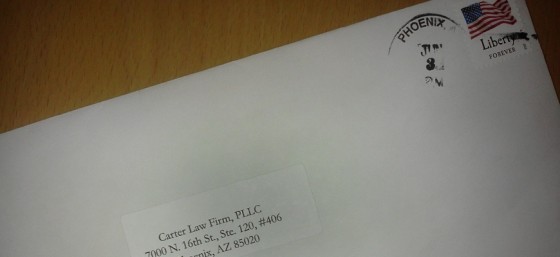
Self-Addressed Envelope after it's been through the Mail

Self-Addressed Envelope after it’s been through the Mail

Every time I speak about copyright to a group of artists or writers, someone always asks me about how poor man’s copyright works and whether it’s valid. Poor man’s copyright is the idea that you can establish that you created something first by mailing a copy of your work to yourself and using the date on the postmark as proof of when you created it. If anyone copies your work and claims a creation date that’s after your postmark, you can use the postmark to show that you created the work first.

To anyone who’s been sending their work to themselves, you can stop. Poor man’s copyright is crap and a waste of your time and money. A postmark on an envelope tells you when the post office processed the envelope, not what was inside of it. You could easily send an unsealed envelope to yourself and put your work in it later and seal it.

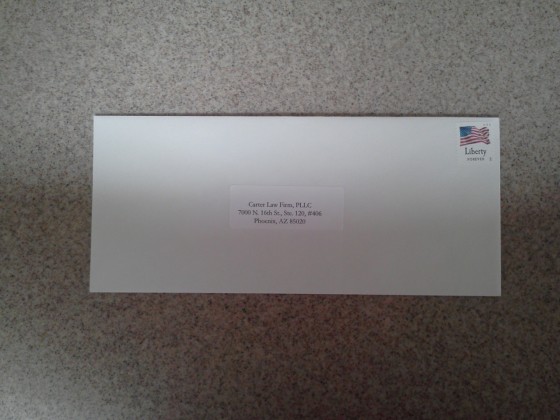
Self-Addressed Unsealed Stamped Envelope Ready for the Mail

Self-Addressed Unsealed Stamped Envelope Ready for the Mail

You get the exclusive rights to copy, distribute, display, perform, and to make derivative works based on your work the second you’ve fixed your work in any tangible medium. (Sorry, there’s no copyright protection for ideas that only exist in your head.) If you want to maximize your rights in your work, including the ability to sue for copyright infringement and collect statutory damages, you need to register your work with the U.S. Copyright Office. You can do it online and most application fees are only $35.

To demonstrate why poor man’s copyright doesn’t work, I recently addressed an envelope to myself and sent it, unsealed, through the mail. I made a video about the result. You can see it below or here.

If you want more information about how you can protect your rights in your work, please contact me or a copyright attorney in your community. You can connect with me on TwitterGoogle+FacebookYouTubeLinkedIn, or you can email me. You can also subscribe to the Carter Law Firm newsletter.
Please visit my homepage for more information about Carter Law Firm.