FAQs about the Legalities of Social Media

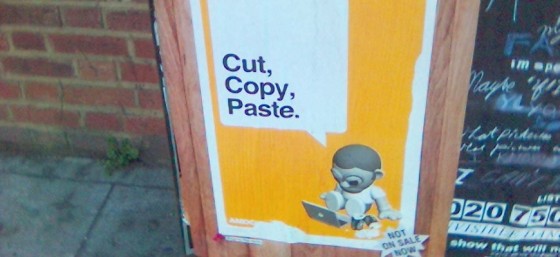
Carter Law Firm's Official Postcard - let me know if you want me to send you one.

Carter Law Firm’s Official Postcard – Let me know if you want me to send you one.

I had the pleasure of speaking at the Public Relations Society of America’s Western District Conference last weekend. I led two sessions: “So you want to do a flash mob” and “The Legal Side of Blogging: 10 Questions to Ask Before you Hit ‘Publish.’” Both sessions were great and I wanted to share some of the frequent questions I get when I talk about the legalities of social media.

What should you do if you’re outsourcing your blog content?
You need a kick ass contract that clearly states who owns the copyright in the content that is created. If the hiring company obtains copyright, does the blogger get permission to put a copy of the work in their portfolio to obtain other work? The contract should also state who is responsible if there are any problems related to the work (i.e., copyright infringement claim) or if there are any disputes related to the contract.

What should you do if you want to use a photo from a company’s site, such as if want to write a positive review of their company?
There’s a chance that using the photo could qualify as fair use; however it’s probably best to avoid the possibility of being hit with a copyright infringement claim by asking the company if you can use their photo. You never know who owns the rights to an image and if there are any restrictions related to using it.

What’s the worst case scenario if you use an image from Google Images without verifying that it was available for use with a Creative Commons license or had been released to public domain?
You could be sued for tens of thousands of dollars for copyright infringement. I always say that just because someone sues you that it doesn’t mean they’re going to win, but in this case, they might. You can still be sued and lose even if you didn’t mean any harm.

I get permission to use every photo on my blogs or use photos that are available under Creative Commons licenses that allow me to modify and commercialize each image.

What if you’ve been using Google Images or you haven’t kept track of what images you’re allowed to use?
Probably no one wants to hear this, but I’d rip every image out of your site and start over, making sure that you own or have permission to use every image on your site.

These are my rules of thumb when it comes to social media:

  • Assume everything you post online will be seen by your best friend, your worst enemy, your boss, and your mother. If you’re not ok with one of those people seeing what you want to say, don’t post it.
  • Don’t post anything online that you wouldn’t put on the front page of the newspaper.

For more information about the legalities of social media, please check out my book The Legal Side of Blogging: How Not to get Sued, Fired, Arrested, or Killed.

You can also subscribe to the Carter Law Firm monthly newsletter.
You can connect with me on TwitterGoogle+FacebookYouTubeLinkedIn, or you can email me.
Please visit my homepage for more information about Carter Law Firm.

Sending a Bill When Someone Steals Your Work

Mushroom? by Oslo in the Summertime from Flickr

Mushroom? by Oslo in the Summertime from Flickr

I’m a member of a Facebook group for people to discuss and share instances where other people use their work. Most of the members are nature photographers who do gorgeous work. Most of them have no desire to sue people who steal their work, but they would like to be compensated. And some of them are getting pissed when they find that someone has stolen their work and have started sending bills to people who use their work without permission.

This isn’t a bad idea. I’ve had a friend get a bill in the mail when he used someone’s photograph without permission that he found via Google Images. You can view it here or below.

When someone comes to me and wants to send a bill to anyone they discover is infringing on their copyrights, I suggest they add information to the website where they show their work about licensing terms and fees. This makes it more credible when the artist sends a bill that essentially says that by using a photograph, the infringer has agreed to pay the fee and abide by the license’s terms. As long as the infringer complies, they are no longer committing copyright infringement.

The downside of this strategy is many people will ignore such a bill if they receive one. Then the question for the artist is “What’s next?” Do you sue them? Send a DMCA takedown notice to get the work taken off their site? Call them out publicly for using your work without permission? Do you drop the issue?

My friend who got the bill for using an authorized image earlier this year got a bill from a company with a track record of suing people who don’t pay the bill and winning. In his case, he choices appeared to be pay the bill (or try to negotiate a lower price) or get sued. If you don’t follow up when people don’t pay the bill, it’s kind of like the photoradar tickets. If you get one in the mail, you can deal with it by paying the fine or going to traffic school or avoid service for four months until the court drops the charge.

I’m not one to tell people what they should do, but I advise people to think their plan of action all the way through before selecting a course of action. If you need help deciding what’s the best strategy for protecting your copyrights, please contact a copyright attorney in your community.

For more information about copyright and blogs, please check out my book The Legal Side of Blogging: How Not to get Sued, Fired, Arrested, or Killed.
You can connect with me on TwitterGoogle+FacebookYouTubeLinkedIn, or you can email me.
Please visit my homepage for more information about Carter Law Firm.

Update on Registering the Copyright in your Blog

Library of Congress by ctj71081 from Flickr - Where your work goes when you register it with the U.S. Copyright Office.

Library of Congress by ctj71081 from Flickr – Where your work goes when you register it with the U.S. Copyright Office.

I’ve been a proponent of registering your copyright in your blog every three months. The federal Copyright Act states you must register the copyright in your blog within three months of publication or one month of learning of the infringement, whichever happens first.

So every three months (March 31st, June 30th, September 30th, and December 31st) I have a note on my calendar to register my blogs. I take all the content I’ve added to my blog since my last registration, create a PDF, and register it.

I made a mistake on my last copyright application.

I let logic dictate my action and I claimed that my publication date was December 31, 2013 on my last application. I should have said that my word was “unpublished.” If I declare that my work is published, I have to register each post individually. If the work is “unpublished,” the dated posts can be registered as a group.

You would think that putting something on the internet counts as publishing a work, but it doesn’t. In the Copyright Office’s words, “For copyright purposes, ‘publication’ means the distribution of copies of a work to the public by sale or other transfer of ownership, or by rental, lease, or lending. Offering to distribute copies to a group of persons for purposes of further distribution, public performance, or public display is also ‘publication.’ The following do not constitute “publication:” the printing or other reproduction of copies, a public performance or display of the work, or sending copies of the work to the Copyright Office.”

If the only place you put your content is on your blog, it’s likely not published. If you repurpose your content in multiple locations, it might be. (Talk to a copyright attorney to see if you’ve “published” your work.)

For people who only put their work on their blog, they might want to wait until someone steals their content before registering it. That’s a viable option, if you’re going to be on the ball about getting your application in once someone steals your work. If that month passes without you registering your work, you can’t ask the court for statutory damages (only actual damages – which might be $0). I met someone last week who experienced this exact situation. He waited too long to submit their application after learning that someone stole their work.

Even if someone doesn’t think their blog counts as being published, I still say register your work with the Copyright Office every three months. This ensures that if you were wrong about your work being published, you still got your application in within the timeframe set by the law. (It’s only $35 to submit an application.)

If someone steals your work, you should talk with a copyright lawyer ASAP. Even though you registered your work within three months of sharing it online, it might be worth it to take the content that was stolen and register each work individually to increase the amount of statutory damages you can ask for.

For more information about copyright and blogs, please check out my book The Legal Side of Blogging: How Not to get Sued, Fired, Arrested, or Killed.
You can connect with me on TwitterGoogle+FacebookYouTubeLinkedIn, or you can email me.
Please visit my homepage for more information about Carter Law Firm.

Arizona Cyberharassment & Cyberstalking Laws

It's scary to join an open source project by opensourceway from Flickr

It’s scary to join an open source project by opensourceway from Flickr

When I was planning out my year, I learned that January is National Stalking Awareness month. This inspired me to look up the laws on cyberstalking and cyberharassment in Arizona.

When I think about stalking, I think about the guy who follows you from the shadows and hides in the bushes and watches you with binoculars. They always know where you are and show up wherever you go “by coincidence.” When we first started acknowledging stalking as a crime, the perpetrator had to be within physical proximity to you. In person stalking is still an issue and now we have to worry about cyberstalking too – people tracking you wherever you go via the internet and using your posts against you to know where you’re going and to harass you in person and online. Some of these perpetrators do things like attach a GPS to your car so they can track your movements. Creepy!

Stalking and harassment are different, but there’s often overlap between the two. I think when you’re being stalked, you’re also being harassed once you know you have a stalker but the reverse isn’t always true. You can be harassed without being stalked. These crimes are state law crimes, so the definitions may be different depending on where you live. I recommend you check your state’s laws to make sure that they’ve been updated to include cyberstalking and cyberharassment.

Here are the laws in Arizona:

  • Cyberstalking: Intentionally or knowingly engaging in conduct that would cause a reasonable person to fear for their safety or their immediate family’s safety, including the fear of death. (Class 5 Felony); Penalty: 9 months in jail and up to a $150,000 fine
  • Cyberharassment: Communicating with a person with the intent to harass them or with the knowledge that the person was being harassed. (Class 1 Misdemeanor); Penalty: Up to 6 months in jail and up to a $2,500 fine

There’s also a separate law for harassing someone via electronic communications. The definition and penalty is the same as cyberharassment except that it specifies that it applies to harassing, intimidating, terrifying, and/or threatening someone. It seems redundant.

And that’s just the criminal law side. If you cyberstalk or cyberharass someone, you may also be sued for damages in civil court.

On top of that, you may get in trouble with the company who provided you the means to stalk or harass the person. If you do it from your work computer, you might be fired. If you do it via your school’s network, you could be suspended or expelled. If you do it from one of your social media accounts, you can be kicked off the site.

So what are the take-home lessons?

  • If you’re mad at someone or want to give them a hard time, think twice before you begin your course of action. It may not take much to cross the line into cyberharassment. The consequences might be way worse than you think.
  • If you’re being cyberharassed or cyberstalked, report it – to law enforcement, to the site or company that’s facilitating it, and possibly call a lawyer. Cyberharassment sucks and you don’t have to put up with it.

You can connect with me via TwitterGoogle+Facebook, and LinkedIn, or you can email me.
Please visit my homepage for more information about Carter Law Firm.

Register Your Blog’s Copyright Every Three Months

This Sewer is Copyrighted by cogdogblog from Flickr

This Sewer is Copyrighted by cogdogblog from Flickr

My cause for the next year is to encourage independent writers and artists to register the copyrights in their work. If you have a blog, you have to register your content every three months to maximize your options when someone steals your work.

I know a lot of people wouldn’t notice if someone stole their content, but what if someone did that to you? What if someone did that to you and it pissed you off? You might want all your options to be open for you then.

The U.S. Copyright Act says you get the most options when someone steals your content if you register your work within three months of publication or one month of learning of the infringement – whichever happens first. For most bloggers that means they have to register their blog content every three months. Here is a simple breakdown of your possible options depending on when you registered your work.

Possibility #1 – You Never Registered Your Content
The law says you have to register your copyright to sue for copyright infringement. If you refuse to register your work, that’s your prerogative, but that means you can likely only send a cease-and-desist letter or a DMCA takedown notice if someone steals your content.

Possibility #2 – You Registered Your Content After Three Months of Publication
You can sue for copyright infringement, but you can only ask for your “actual damages.” This is the amount of money the thief made from stealing your work and/or the amount of money you didn’t make because he stole your work. In the blogging world, your actual damages could easily be $0.00. Most people don’t sue for actual damages unless the thief made bank off what he stole. You’d also be responsible for paying your attorneys’ fees.

Possibility #3 – You Registered Your Content Within Three Months of Publication
You can sue for copyright infringement, and you can ask for “statutory damages.” Statutory damages can be as high as $150,000, regardless of how much money you lost or the thief made from stealing your work. If you register your work within this time frame the court can make the thief pay your attorneys’ fees too. A lot of attorneys ask if and when you registered your work when you come to them with a copyright claim because they suspect you can’t or won’t want to pay the legal fees that go into fighting one of these cases.

Registering your copyright is preparing for the worst-case scenario. Hopefully you’ll never need to deal with copyright infringement, but you may want to have all your options available to you if it does. You can read about my experience registering my blogs’ copyrights in a post I did just after my first registrations. Registering a literary work only costs $35 per application.

If you are a writer, blogger, or artist, please consult a copyright attorney about the best ways for you to protect your work. Many people can register multiple works under one application, but there may be instances where it’s worth it to register a work separately.

You can connect with me via TwitterGoogle+Facebook, and LinkedIn, or you can email me.
Please visit my homepage for more information about Carter Law Firm.

Don’t Post Stupid Stuff Online

Gestures by Tuppus from Flickr

When I was a kid, I had a shirt that said “think” across the chest and “act” across the back. There was tiny print around the bottom hem that had a series of statements that said “think before you ________.” The shirt’s message was, “Think before you act.” If the company made this shirt today, they should modify the design to say, “Think before you post.”

Think B4 U Post by Mister Norris from Flickr

It blows my mind how much stupid shit people post on the internet, and most of the time, you can tell they do it because they think it’s funny in the moment and they don’t think it all the way through. Before you post anything on the internet, regardless of what it is and where you’re putting it, ask yourself 2 questions:

  1. What’s the worst thing that could happen?
  2. How many ways could this blow up in my face?

We all know how fast an internet post can spread like wildfire. Look at this post by a girl who lost her hat that she got from her mother who died of cancer at the Phoenix airport. I’m sure tens of thousands if not hundreds of thousands of people have seen it. I hope she gets it back. This post went viral because her story touched people’s hearts, but other posts go viral because they’re so offensive.

Always beware of the court of public opinion. You can look like a massive ass on the internet without doing anything illegal. If you do that, be ready for your reputation to be tarnished. That offensive post could easily become the number one result when someone Googles your name, which will hurt your professional and personal lives.

And if you make an offer in a post that is believable, don’t be shocked if someone accepts it. If you post on Facebook, “I lost my phone in a cab in NYC. I’ll give $10K to whoever returns it.” You better get your checkbook out when you get it back or you might find yourself in court for breach of contract.

If you post something on the internet and it garners strong negative reactions, there isn’t much you can do if you don’t like it unless they cross the line into the realms of invasion of privacy or defamation. The only thing you can really do at that point is damage control.

Carter Law Firm’s Postcards

If you post something online and regret it after the fact, deleting it may not be enough to save you. Once you put something out there, you can’t control how many times it will be downloaded, shared, re-posted, and re-tweeted. It only takes a few seconds to create a post, but you may be living with the consequences forever.

The take away lesson: Think before your post…really think. Don’t put anything online that you wouldn’t put on the front page of the newspaper.

You can connect with me via TwitterGoogle+Facebook, and LinkedIn, or you can email me.
Please visit my homepage for more information about Carter Law Firm.

On Being an Outspoken Blogger

Call a spade a spade by scarycurlgirl_photos from Flickr

Call a spade a spade by scarycurlgirl_photos from Flickr

I had the pleasure of speaking at TechPhx last weekend. My presentation was entitled The Legal Side of Blogging: 10 Questions to Ask Before you hit “Publish.” We had a great discussion about how to be an outspoken blogger without setting yourself up to get sued for defamation or invasion of privacy. Hat tip to Tyler Hurst who joined us via Ustream from Portland.

I walked away from the discussion with the reminder that big problems can result from little mistakes. Often times saying less is the best course of action. Sometimes it’s best to point out the dots and let your readers connect them. If there’s a news story that’s a hot topic in your community, you may want to write about the topic in general instead of the specifics about the situation. Your readers will know what you’re alluding to without having to explicitly state it.

When you’re a passionate writer, it’s important to state the facts and your feelings as they are without over-embellishing. Don’t manipulate the facts to get the message you want. Take a step back and review your work. Ask yourself what you can think, what you know, and what you can prove. When something is a rumor or an allegation, state that and cite your source when you can. Always be mindful of the fact that you can be sued for defamation if you repeat someone else’s defamatory statement – even if you didn’t know it was false.

One of my favorite ways to state my views without having to be so blunt about it is to quote someone who shares my perspective. I could call someone that I dislike or disapprove of an ass on my blog, but I think it’s more fun and effective to listen when others are talking about the issue and quote one of them when I hear them say “He’s a prick.”

If you want to learn more about your online dos and don’ts, check out my book The Legal Side of Blogging: How Not to get Sued, Fired, Arrested, or Killed.
You can also connect with me via TwitterGoogle+Facebook, and LinkedIn, or you can email me.
Please visit my homepage for more information about Carter Law Firm.

Is It Illegal to Tweet Lies?

Last week during Hurricane Sandy, many of us turned to Twitter for up-to-the-minute updates about the storm. An anonymous person using the handle @ComfortablySmug made several tweets.

  • BREAKING: Con Edison has begun shutting down all power in Manhattan
  • BREAKING: Governor Cuomo is trapped in Manhattan. Has been taken to a secure shelter
  • BREAKING: Confirmed flooding on NYSE. The trading floor is flooded under more than 3 feet of water.

It was later revealed that the information was false, but not before these tweets were retweeted more than 500 times according to reports.

Buzzfeed’s Jack Stuef investigated the situation and determined that the anonymous tweeter was Shashank Tripathi, a campaign manager for Republican congressional candidate Christopher Wight. Tripathi has since resigned from his position and tweeted an apology for posting inaccurate information. That was his latest tweet from that account.

The New York District Attorney’s Office was asked to pursue criminal charges against Tripathi for his irresponsible tweeting. It will be interesting to see if he’s charged.

What Might He Be Charged With?
In many situations, it’s not illegal to lie unless you’re entering realms like fraud or identity theft. I did some digging in the Arizona criminal code and I could see a prosecutor making an argument that a person who posts inaccurate information during an emergency could be charged with electronic harassment, falsely reporting an emergency or causing public panic, creating a hoax, or possibly something along the lines of disorderly conduct.

Some of these crimes, like electronic harassment, require a victim and Tripathi didn’t appear to have a target. I wonder if issues like this might make the prosecution’s job harder.

What About Tripathi’s Right to be Anonymous?
Yes, the First Amendment protects your right to free speech, including your right to speak anonymously. It does not guarantee your anonymity. If you want to be anonymous, you have the responsibility of not making it easy for others to figure out who you are. Apparently @ComfortablySmug was unmasked because he posted censored pictures of himself and the uncensored version was easily discovered and revealed his identity.

If he committed a crime, his right to be anonymous also went out the window.

What do you think should happen to Shashank Tripathi? Should he be charged with a crime for tweeting lies about Hurricane Sandy? Please share your opinion as a comment below.

If you want to learn more about your online dos and don’ts, check out my book The Legal Side of Blogging: How Not to get Sued, Fired, Arrested, or Killed.
You can also connect with me via TwitterGoogle+Facebook, and LinkedIn, or you can email me.
Please visit my homepage for more information about Carter Law Firm.

Woman Attacks Camera Man on Camelback

Cholla Trail Landmark - Camelback Mountain by Dru Bloomfield - At Home in Scottsdale

Cholla Trail Landmark – Camelback Mountain by Dru Bloomfield – At Home in Scottsdale

Last week Pete Kosednar was hiking on Camelback Mountain when he saw a woman on the trail who didn’t have her dog on a leash. He turned on his video camera and asked her is she knew that her dog was supposed to be leashed. She didn’t appreciate being filmed and reacted by swearing at him and hitting him. Check out the video for yourself.

Was Pete Kosednar wrong to film this woman? No! She was in a public place where she had no expectation of privacy. As long as he wasn’t filming her to commercialize her image or filming her in a way that constituted any type of harassment, there’s nothing she could do to stop him from filming her. And now the video is on YouTube where everyone can see her behaving badly.

I understand that privacy is a hot-button topic for a lot of people. It is for me. However, you have no expectation of privacy for anything you do in view of the public so there’s nothing you can do to stop someone from filming you in most situations. Pete could probably strap a video camera to his head and tape most of his day-to-day activities without risk of penalty.

There are some places where you can expect to not be filmed like public bathrooms, tanning beds,  locker rooms, and retail businesses that don’t allow you to take pictures or shoot video in the store. This woman was on Cholla Trail on Camelback Mountain. There are no special restrictions on shooting photos on video there.

It also amuses me when people make a scene about being filmed in public. We have surveillance cameras everywhere – in the stores and shopping centers, on courthouses, monitoring freeway traffic, etc. It’s funny when people accept those cameras as a part of every day life but freak out when someone turns on the camera in their phone when they’re standing on the sidewalk or in a public park.

The take-away lesson here is if you’re going to behave badly in public, whether you’re breaking the law, violating a social norm, or making an ass of yourself, don’t be surprised when you find out that someone videotaped it and posted it online.

Feel free to connect with me via TwitterGoogle+Facebook, and LinkedIn, or you can email me.
Please visit my homepage for more information about Carter Law Firm.
Check out my ebook on Amazon – The Legal Side of Blogging: How Not to get Sued, Fired, Arrested, or Killed

Hat tips to Phoenix New Times for running the story and Jeff Moriarty for telling me about it.

I Registered the Copyright in my Blogs

Jump for Joy! by dospaz

I finally decided to practice what I preach and I registered the copyrights in my blogs over the weekend. For those of you who don’t know, I have two blogs: this one and my personal blog The Undeniable Ruth. I post weekly on each one.

My work only exists on my websites so the first thing I had to do was create a document that compiled all of my posts for each blog. This blog wasn’t too bad since I’ve only had it since January. I’ve been publishing weekly on The Undeniable Ruth since January 2010, not to mention all the extra posts I did for Sponsor A Law Kid, so creating a master document for that took the better part of two days. That was a pain in the ass that I don’t want to repeat. Once I had these documents created, I saved them as PDFs.

The first time I used the U.S. Copyright Office website, it was kind of stressful. It isn’t always obvious what you’re supposed to do to create a profile and to apply to register your copyright. I had to read each screen at least twice to make sure I was filling everything out properly. You have to go through about eight screens to fill out the application, upload your document, and pay the fee ($35 for literary work). It was really weird that the site makes you pay the fee first and then upload your work.

You have the option to submit your work and payment online or to send it in. According to the site it currently takes about 2.5 months to process your application if you do it electronically and 6.5 months if you mail in your work.

Once I got through the copyright application process once, the second time through went much faster. If you’re looking to register your copyrights, I strongly recommend doing it the first time with a copyright attorney or someone who has gone through the process before. As an intellectual property attorney, I had the benefit of understanding all the verbiage on the application which made it easier to navigate.

This was the first of several copyright applications to come. Since my work is on my blogs, I have to re-register my work every three months to ensure that my new content is protected. You have copyright rights in your work the moment you create them, but you have to register your work if you want to sue someone for infringement if they steal your content. If you register your work within three months of publication or one month of learning of the infringement (whichever is first!), you’re eligible for attorneys’ fees and statutory damages which can go up to $150,000. If you don’t register within this time period, you’re only eligible for your actual damages, which in the world of  blogging could be $0.00.

If you have a blog, I recommend registering your work every three months. Put a standing reminder to yourself on your calendar. Start a master document for your blog posts now so you don’t have the arduous task of compiling your work every time it’s time to re-register your work. If you don’t want to do this yourself, hire an attorney to do it for you. The time to protect your work is now. If wait until someone steals your work, the options you have left may not be worth pursuing.

Feel free to connect with me via TwitterGoogle+Facebook, and LinkedIn, or you can email me.
Please visit my homepage for more information about Carter Law Firm.