FAQs about the Legalities of Social Media

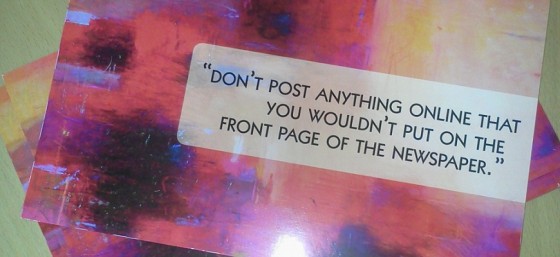
Carter Law Firm's Official Postcard - let me know if you want me to send you one.

Carter Law Firm’s Official Postcard – Let me know if you want me to send you one.

I had the pleasure of speaking at the Public Relations Society of America’s Western District Conference last weekend. I led two sessions: “So you want to do a flash mob” and “The Legal Side of Blogging: 10 Questions to Ask Before you Hit ‘Publish.’” Both sessions were great and I wanted to share some of the frequent questions I get when I talk about the legalities of social media.

What should you do if you’re outsourcing your blog content?
You need a kick ass contract that clearly states who owns the copyright in the content that is created. If the hiring company obtains copyright, does the blogger get permission to put a copy of the work in their portfolio to obtain other work? The contract should also state who is responsible if there are any problems related to the work (i.e., copyright infringement claim) or if there are any disputes related to the contract.

What should you do if you want to use a photo from a company’s site, such as if want to write a positive review of their company?
There’s a chance that using the photo could qualify as fair use; however it’s probably best to avoid the possibility of being hit with a copyright infringement claim by asking the company if you can use their photo. You never know who owns the rights to an image and if there are any restrictions related to using it.

What’s the worst case scenario if you use an image from Google Images without verifying that it was available for use with a Creative Commons license or had been released to public domain?
You could be sued for tens of thousands of dollars for copyright infringement. I always say that just because someone sues you that it doesn’t mean they’re going to win, but in this case, they might. You can still be sued and lose even if you didn’t mean any harm.

I get permission to use every photo on my blogs or use photos that are available under Creative Commons licenses that allow me to modify and commercialize each image.

What if you’ve been using Google Images or you haven’t kept track of what images you’re allowed to use?
Probably no one wants to hear this, but I’d rip every image out of your site and start over, making sure that you own or have permission to use every image on your site.

These are my rules of thumb when it comes to social media:

  • Assume everything you post online will be seen by your best friend, your worst enemy, your boss, and your mother. If you’re not ok with one of those people seeing what you want to say, don’t post it.
  • Don’t post anything online that you wouldn’t put on the front page of the newspaper.

For more information about the legalities of social media, please check out my book The Legal Side of Blogging: How Not to get Sued, Fired, Arrested, or Killed.

You can also subscribe to the Carter Law Firm newsletter.
You can connect with me on Twitter, Google+, Facebook, YouTube, LinkedIn, or you can email me.
Please visit my homepage for more information about Carter Law Firm.

Sending a Bill When Someone Steals Your Work

Mushroom? by Oslo in the Summertime from Flickr

Mushroom? by Oslo in the Summertime from Flickr

I’m a member of a Facebook group for people to discuss and share instances where other people use their work. Most of the members are nature photographers who do gorgeous work. Most of them have no desire to sue people who steal their work, but they would like to be compensated. And some of them are getting pissed when they find that someone has stolen their work and have started sending bills to people who use their work without permission.

This isn’t a bad idea. I’ve had a friend get a bill in the mail when he used someone’s photograph without permission that he found via Google Images. You can view it here or below.

When someone comes to me and wants to send a bill to anyone they discover is infringing on their copyrights, I suggest they add information to the website where they show their work about licensing terms and fees. This makes it more credible when the artist sends a bill that essentially says that by using a photograph, the infringer has agreed to pay the fee and abide by the license’s terms. As long as the infringer complies, they are no longer committing copyright infringement.

The downside of this strategy is many people will ignore such a bill if they receive one. Then the question for the artist is “What’s next?” Do you sue them? Send a DMCA takedown notice to get the work taken off their site? Call them out publicly for using your work without permission? Do you drop the issue?

My friend who got the bill for using an authorized image earlier this year got a bill from a company with a track record of suing people who don’t pay the bill and winning. In his case, he choices appeared to be pay the bill (or try to negotiate a lower price) or get sued. If you don’t follow up when people don’t pay the bill, it’s kind of like the photo radar tickets. If you get one in the mail, you can deal with it by paying the fine or going to traffic school or avoid service for four months until the court drops the charge.

I’m not one to tell people what they should do, but I advise people to think their plan of action all the way through before selecting a course of action. If you need help deciding what’s the best strategy for protecting your copyrights, please contact a copyright attorney in your community.

For more information about copyright and blogs, please check out my book The Legal Side of Blogging: How Not to get Sued, Fired, Arrested, or Killed.
You can connect with me on Twitter, Google+, Facebook, YouTube, LinkedIn, or you can email me.
Please visit my homepage for more information about Carter Law Firm.

Update on Registering the Copyright in your Blog

Library of Congress by ctj71081 from Flickr - Where your work goes when you register it with the U.S. Copyright Office.

Library of Congress by ctj71081 from Flickr – Where your work goes when you register it with the U.S. Copyright Office.

I’ve been a proponent of registering your copyright in your blog every three months. The federal Copyright Act states you must register the copyright in your blog within three months of publication or one month of learning of the infringement, whichever happens first.

So every three months (March 31st, June 30th, September 30th, and December 31st) I have a note on my calendar to register my blogs. I take all the content I’ve added to my blog since my last registration, create a PDF, and register it.

I made a mistake on my last copyright application.

I let logic dictate my action and I claimed that my publication date was December 31, 2013 on my last application. I should have said that my word was “unpublished.” If I declare that my work is published, I have to register each post individually. If the work is “unpublished,” the dated posts can be registered as a group.

You would think that putting something on the internet counts as publishing a work, but it doesn’t. In the Copyright Office’s words, “For copyright purposes, ‘publication’ means the distribution of copies of a work to the public by sale or other transfer of ownership, or by rental, lease, or lending. Offering to distribute copies to a group of persons for purposes of further distribution, public performance, or public display is also ‘publication.’ The following do not constitute “publication:” the printing or other reproduction of copies, a public performance or display of the work, or sending copies of the work to the Copyright Office.”

If the only place you put your content is on your blog, it’s likely not published. If you repurpose your content in multiple locations, it might be. (Talk to a copyright attorney to see if you’ve “published” your work.)

The downside of blog content not counting as published is you have to register you work prior to it being stolen to be eligible for statutory damages under the copyright laws. So the idea a lot of my copyright attorney friends and I believed about registering every three months is not a good strategy. Also, the Copyright Office doesn’t like it when you register posts that were released on different days as a single work. Experience tells me that they’ll let you do it, but if they know that’s what you’re doing, they’ll tell you that you have to register each post individually.

Because of this, the best strategy for people who want to be able to sue for copyright infringement if their blog content is stolen is to register your work before you put a post on your site. Yes, this will be more expensive because each post will need its own registration, so you might want to only register the posts you think will be stolen, and even then you may want to only register the posts that you think will be stolen by someone who can afford to pay the damages assessed by the court and your attorneys’s fees. Otherwise you might be better off not suing for copyright infringement and sending a cease and desist or a DMCA takedown notice.

If someone steals your work, you should talk with a copyright lawyer ASAP. Even if you didn’t register you work before the infringement occurred, you may be in a situation where it is worthwhile to pursue actual damages which is how much money you lost and the alleged infringer made because of the infringement. They can also discuss other ways to address infringement that don’t involve the court system.

For more information about copyright and blogs, please check out my book The Legal Side of Blogging: How Not to get Sued, Fired, Arrested, or Killed.
You can connect with me on Twitter, Google+, Facebook, YouTube, LinkedIn, or you can email me.
Please visit my homepage for more information about Carter Law Firm.
DMCA Abuse

Copyright license choice by opensourceway from Flickr

Copyright license choice by opensourceway from Flickr

The Digital Millennium Copyright Act (DMCA) is part of the copyright law. Its purpose is to protect people who provide online forums but don’t control the content people post to them – like YouTube and Pinterest. If they receive a notice that material on their site is allegedly copyright infringement, they must remove it. This law gives content creators a way to react to copyright infringement when someone posts their work online without permission. Instead of sending a cease and desist letter to the person who stole their work, they bypass them and deal with the infringer’s webhost instead.

Lately, I’ve seen a few instances where people have been improperly using the DMCA to get material removed from the internet that they don’t like. I’m starting to refer to these acts as DMCA abuse.

1. Using the DMCA to address TM Infringement
The DMCA should only be used for copyright issues – when you suspect someone is using your original content without your permission. Don’t use it to removed suspected instances of trademark infringement.

In a recent incident, GoPro allegedly sent a DMCA takedown notice to DigitalRev’s webhost to remove a picture of its camera from the site. The photo was in article that compared GoPro against another camera. GoPro didn’t think DigitalRev copied their content, but that they were using a picture of the camera that had the wrong branding. GoPro should have sent DigitalRev an email with a correct image of the camera instead of getting the whole article pulled for alleged copyright infringement.

2. Using the DMCA to Eliminate the Original
This story really bothered me. Somebody copied someone’s original content onto their site, and then used the DMCA to claim that they were the real owners and get the original removed for its site. Thankfully the original author could get their work put back on their site by sending a DMCA counter takedown notice.

Apparently this is a common incident. This behavior was so disturbing, I had to make a video about it.

If you think you have questions about how you, your brand, or your content is being used online, please consult an intellectual property attorney. Don’t just send a DMCA takedown notice – that may not be the right tool to address your problem. When you send a DMCA takedown notice, you attest under the penalty of perjury, that your statements are true. If you send a DMCA takedown notice and it turns out what you did qualifies as what I call DMCA abuse, you may have committed a crime.

For more information about copyright, please check out my book The Legal Side of Blogging: How Not to get Sued, Fired, Arrested, or Killed.
You can connect with me on Twitter, Google+, Facebook, YouTube, LinkedIn, or you can email me.
Please visit my homepage for more information about Carter Law Firm.
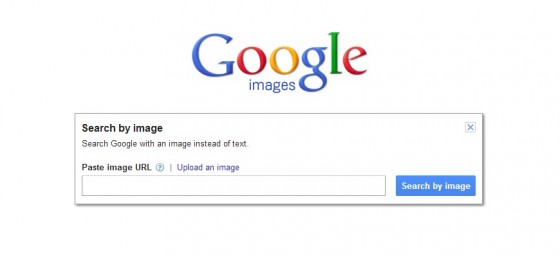
Using Google Image Search to Detect Copyright Infringement

Google Image SearchI heard you can input a picture into the Google Images search engine to see if someone has stolen or used one of your pictures without your consent. I decided to try to figure it out to see if it works.

I’m happy to report it’s super easy. Here’s how you do it.

  1. Go to the Google Images search page.
  2. Click on the camera icon on the far right of the search bar. This will bring up the “search by image” box.
  3. Paste the URL for the image you want to search for or upload it and hit “Search.”
  4. The results will show you every instance where someone has used that photo.
My paintball wound - Photo by Merlz Tamondong

My paintball wound – Photo by Merlz Tamondong

I started looking for images I’ve used on The Undeniable Ruth and I found an instance where someone pulled an image off my site without my permission. It’s a picture of me from Ladies’ Paintball Night. Someone put it on a paintball forum without asking me first. Even though this is a picture of me, I don’t own the copyright in it so there’s nothing I can do to get it removed, and to be honest, I don’t really care.

This search engine is one tool you can use to search for copyright infringement, but it won’t catch every copy of your photos, just the copies of the photos from your site. I know this picture of my dog Rosie is on my site and I shared it with Attorney at Work for a post I wrote for them. I didn’t give them a copy of the image off my site, so when I searched for this picture of Rosie, it only showed images from my site, not theirs.

My sweet Rosie dog

My sweet Rosie dog

If you’re worried about people stealing your work from your site, keep an eye on your analytics. A lot of people think it’s ok to use an image off your site as long as they give an attribution and a link to the source. All they may have done is committed copyright infringement and told you about it. I’ve discovered two instances of copyright infringement of my work this way.

If you create any type of content and you’re concerned about copyright infringement, please consult a copyright attorney in your community who can help you create and implement a strategy to protect your work.

Lights Camera Lawsuit

There’s always a need for quality legal information for photographers. That’s why I created an online course called Lights Camera Lawsuit: The Legal Side of Professional Photography to address photographers’ most important questions. I want you to feel secure in your business, confident in the way you operate day-to-day, knowing that you’ve set yourself up to get paid what your worth without incident.

At $497, the course contains nearly six hours of legal information you can immediately apply to your business. That’s less than what I charge for two hours of legal work for clients!  

Please subscribe for more information and to make sure you don’t miss out on any special offers or discounts.

Maintaining Privacy with an Online Alter Ego

Paper Bag (#95734) by Mark Sebastian from Flickr

Paper Bag (#95734) by Mark Sebastian from Flickr

I just got back from the interactive track of South by Southwest (SXSW) in Austin – the most amazing conference for all things related to social media. I attended as many sessions as I could but there were dozens of other talks I wish I could have attended. I came back to Phoenix buzzing with ideas.

I attended an interesting session by author/journalist Pernille Tranberg from Copenhagen. She co-authored the book Fake It! Your Guide to Digital Self-Defense.  She uses her real name on LinkedIn and Twitter, but she uses fake names on Facebook and for filling out forms online. She has two complete alter egos. Her friends know her fake name on Facebook but she generally doesn’t share that information with others.

In a world that pushes of online transparency, her ideas run in the opposite direction. This is a great tactic for people to use who don’t want everyone looking them up or if they want to have a private online life that is completely separate from their professional life. Having a fake persona makes it less likely that your boss or prospective boss will be able to find you on Facebook or anywhere else you use your fake name. Additionally, if your fake identity is ever stolen it won’t be devastating for you because there are no assets connected to your alter ego.

If you’re interested in creating an alter ego for yourself, check out Fake Name Generator. It will give you a name, address, email address, username, password, profession, and even information like height, weight, blood type, and mother’s maiden name.

Now, does using a fake name violate the terms of service of social media sites that require you to use your real name or have a policy against one person having multiple accounts? Yes. But if no one reports you, how will they ever know?

I also attended a session on Bullying: Social Media as Problem and Solution which featured Marta Gossage, community manager for Reddit. She spoke about how people are encouraged to use pseudonyms on Reddit and by doing so it allows people to share and connect with people in a way that they don’t feel comfortable doing in real life. She said it also reduces the amount of harassment because most people don’t know each other in real life and participants on the site are good at enforcing the ideal that they can attack an idea but not the person.

Marta encourages people to use fake names because it’s easier to share without fear of judgment when no one knows who you are and because it’s easier to delete a fake identity than a real one from the internet. This is particularly true for young people who don’t think before they post and may regret the things they post which might affect their ability to get jobs or accepted into college.

I have a friend who maintained two Facebook profiles during law school – one was under her real name that was mostly a placeholder in case a professional contact tried to look her up. The other was under her fake name where she was free to be herself. Knowing what I know about her career plans, it made sense for her to separate her social life from her professional one. (Don’t worry – she doesn’t do anything bad. She’s just a bit of a free spirit in a conservative industry where some might look down on her boisterousness.)

If you want to create a fake persona online, remember what Benjamin Franklin said: “Three can keep a secret, if two of them are dead.” Be careful to only share your fake identity with people who will keep it private.

You can connect with me via Twitter, Google+, Facebook, YouTube, and LinkedIn, or you can email me.
Please visit my homepage for more information about Carter Law Firm.

Using the Court of Public Opinion to Stop Cyberharassment

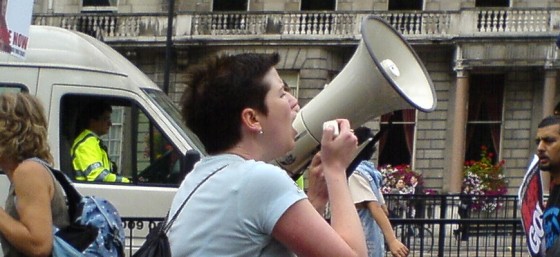
and bullhorns by mikeinlondon from Flickr

and bullhorns by mikeinlondon from Flickr

I recently taught a seminar for the State Bar of Arizona E-Commerce and Technology section. I’m a big believer that if you’re cyberharassed, cyberbullied, or cyberstalked online that you should report it – first to the website or service where it’s occurring and then to the police if the person continues to misbehave despite being told to knock it off or if the website or service doesn’t do anything about it. She said, in her case, law enforcement wanted to pass the buck to another agency than deal with the problem themselves.

That’s discouraging. What are you supposed to do if you’re being harassed and the people whose job it is to stop this behavior are ignoring you?

My first thought was, “The squeaky wheel gets the grease.” If you keep reporting the problem, the powers that be might realize that doing their job is the best course of action because you’re not going to go away until they do. You might have to go above their heads and report them to their superiors to make this happen. A nasty letter from an attorney written on your behalf might do the trick too.

If that doesn’t work or if you’re in a situation that needs immediate attention, consider turning to the court of public opinion and publicly call your harasser/bully for their bad behavior. Use your social network to rally support for your situation. Contact the media and try to get them to run a story about it. If there’s enough public outcry, maybe the powers that be will do their jobs or the person who’s harassing you will leave you alone.

If you want to turn to the media or social media, my one word of caution is to mindful about what you say. Resist the urge to exaggerate – it might cross the line into the realm of defamation or false light. Instead stick to the facts, your feelings about the facts, and what you want to happen as a result. If you use the media or the public to try to make a change, you have to tell them what you want whether it’s contacting a certain government official, signing a petition, boycotting a business, etc. Don’t tell people to harass the person who is harassing you; that might be soliciting a crime

Be sure to keep copious records so you can back up your facts with evidence if you need to defend yourself. Some people may attack you just to try to shut you up.

My final word on this topic is if you’re going to try to use the media or the court of public opinion to resolve a problem, you’re going to have to grow a thick skin. Some people are vicious and will call you out for calling out someone else. Surround yourself with a strong group of supporters to bolster your spirits when the haters come after you.

If you’re being cyberharassed, consult an attorney in your community to discuss the best strategy to make it stop. You can connect with me via Twitter, Google+, Facebook, YouTube, and LinkedIn, or you can email me.
Please visit my homepage for more information about Carter Law Firm.

How To Get a Free Consultation with Ruth Carter

Photo by Don McPhee

Photo by Don McPhee

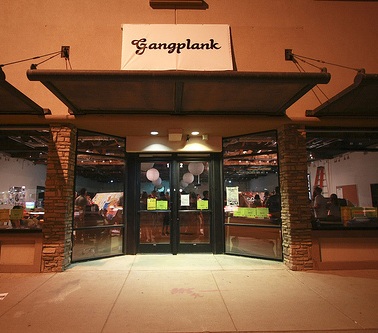
I’m excited to share that I’ve teamed up with Gangplank in Chandler to offer free legal mentoring services on the first Monday of the month from 1pm until 4pm. I can see 3 people for 45-minutes each every month at no charge.

Hello Beautiful by Gangplank HQ from Flickr

Hello Beautiful by Gangplank HQ from Flickr

My legal mentoring hours are a great opportunity to informally bat around your ideas and questions about your projects and business. Coming to my mentoring hours does not create an attorney-client relationship between us. We won’t have any ongoing obligations to each other unless we decide to create a formal working relationship.

Gangplank provides free collaborative workspaces in Arizona, Virginia, and Canada. They provide the physical and social infrastructure for creative people to launch their startups. These are wonderful places for freelancers and new business owners to work. In Arizona, Gangplank has locations on Chandler, Avondale, and Tucson.

I love working with Gangplank. They have a fantastic group of dynamic people who have an enormous amount of creativity and drive. They have a very informal environment and they do incredible work. It fits brilliantly with my desire to be the approachable lawyer who wears t-shirts.

Skulls & Stripes by Gangplank HQ from Flickr

Skulls & Stripes by Gangplank HQ from Flickr

Gangplank in Chandler is located at 260 South Arizona Avenue. Their events calendar shows their mentors’ availability and also all their other events like their weekly brown bag presentations, hacknights, and workshops. They have a wealth of other mentors too who provide assistance in the areas of business, leadership, marketing, design, finance, and technology.

Gangplank is in charge of scheduling the mentoring hours so please check their event calendar for my availability. You can book a mentoring appointment with me by emailing them at chandler@gangplankhq.com.

Please note: my mentoring hours at Gangplank are not for my ongoing clients with whom I’ve created an attorney-client relationship. These appointments are for people who think they might need a lawyer, people who just want some general legal information, law students, anyone else who wants to chat for an hour.

You can connect with me via Twitter, Google+, Facebook, YouTube, and LinkedIn, or you can email me.
Please visit my homepage for more information about Carter Law Firm.

Choose Your Strategy to Protect Your Work Before Posting it on the Internet

My artwork for Dans office by Romers from Flickr

My artwork for Dans office by Romers from Flickr

A friend recently asked me about a common situation her clients face. They are artists who, before the internet, could only show their work to a large audience at art festivals. She said these artists hesitate to market their work online because they’re afraid that it could be stolen.

Could their work be illegally copied if they show it on the internet? Yes. I worked with an artist last year who had their entire catalog illegally copied.

Should they us the internet to market their work despite this risk? Probably. If you’re an artist you have to weigh the risk of having your work illegally copied against the benefit of reaching a larger audience.

My unsolicited advice to artists is to decide how you want to respond if your work is stolen before you put your work out there and plan accordingly.

  • If you want to sue the people who illegally copy your work, you have to register your copyrights with the U.S. Copyright Office.
  • If you want to license your work, meaning people can pay you for the right to reproduce your work on their sites, you need to have licensing terms and fees. This way people can legally purchase the rights to use your work and you can send a bill to the people who illegally copy your work. This recently happened to a friend of mine.
  •  If all you want to do is force them to remove the image when you detect someone’s stolen your work, you need to understand the Digital Millennium Copyright Act or know an attorney who does who can send the proper takedown notice on your behalf.

When you put your work out there, you should be diligent about watching the internet for potential infringement. Often times people think they can use your work if they provide an attribution and a link to the original. What they’ve really done is made it easy for you to determine who is using your work without your permission.

My two cents on this issue is you shouldn’t let your fears about copyright infringement prevent you from using the internet to market your work if you’re an artist, but you should have a strategy in place in advance for dealing with it when it occurs.

For more information on this and related topics, please check out my book The Legal Side of Blogging: How Not to get Sued, Fired, Arrested, or Killed, available on Amazon.

You can connect with me via Twitter, Google+, Facebook, YouTube, and LinkedIn, or you can email me.
Please visit my homepage for more information about Carter Law Firm.