Independents Week Specials at Carter Law Firm

Carter Law Firm Independents Week 2013One of the things I love about being a solo attorney in Phoenix is I get to be part of Local First Arizona. This is an organization for locally-owned businesses and it’s a great place to meet and connect with amazing professionals in the state.

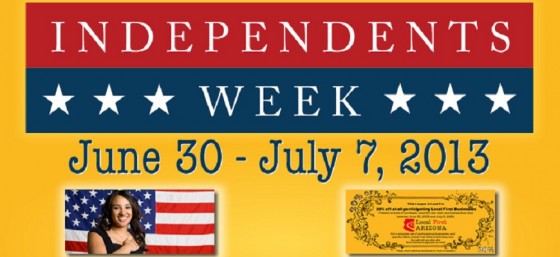
Independents Week is coming up June 30 – July 7, 2013. Local First created the Golden Coupon program for this week to celebrate these businesses and give you another reason to check out the independent businesses in your community. Dozens of businesses will be giving patrons a 20% discount if they shop with a Golden Coupon during Independents Week. Dozens of Local First members all over Arizona are participating. Check out the full list on the Local First website and my list of places I’m excited to visit on The Undeniable Ruth.

After seeing the success of last year’s Golden Coupon program, Carter Law Firm is participating in this year’s program and offering 20% off legal consultations. Since there are only so many hours in the day, the firm only requires you to contact us during Independents Week to get in on the discount. You can schedule the consultation itself anytime in July 2013 and use your Golden Coupon.

Here’s how to use your Golden Coupon with Carter Law Firm:
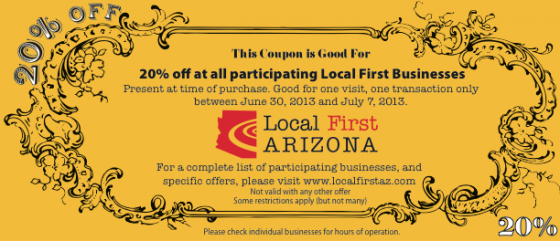
  1. golden-couponPrint the Golden Coupon from Local First Arizona.
  2. During Independents Week (June 30 – July 7) contact the Ruth and say you want to book a legal consultation with your Golden Coupon.
  3. Schedule you appointment for any mutually agreed upon time during July 2013.

Please note, that you should schedule an appointment to talk about your business, intellectual property, social media, or flash mob law needs. All other legal questions are outside the firm’s scope of practice.

Don’t forget to check out all the other locally owned businesses that are participating in the Golden Coupon program. This is a great opportunity to try out a new place or revisit a business you love in your community.

You can connect with me on Twitter, Google+, Facebook, YouTube, LinkedIn, or you can email me. You can also subscribe to the Carter Law Firm newsletter.
Please visit my homepage for more information about Carter Law Firm.
Poor Man’s Copyright Doesn’t Work

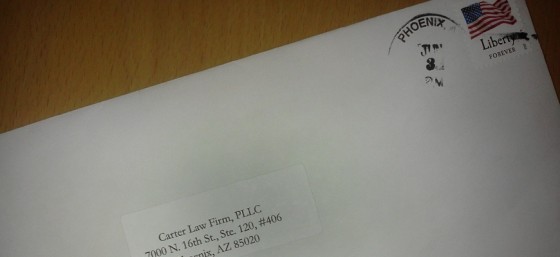
Self-Addressed Envelope after it's been through the Mail

Self-Addressed Envelope after it’s been through the Mail

Every time I speak about copyright to a group of artists or writers, someone always asks me about how poor man’s copyright works and whether it’s valid. Poor man’s copyright is the idea that you can establish that you created something first by mailing a copy of your work to yourself and using the date on the postmark as proof of when you created it. If anyone copies your work and claims a creation date that’s after your postmark, you can use the postmark to show that you created the work first.

To anyone who’s been sending their work to themselves, you can stop. Poor man’s copyright is crap and a waste of your time and money. A postmark on an envelope tells you when the post office processed the envelope, not what was inside of it. You could easily send an unsealed envelope to yourself and put your work in it later and seal it.

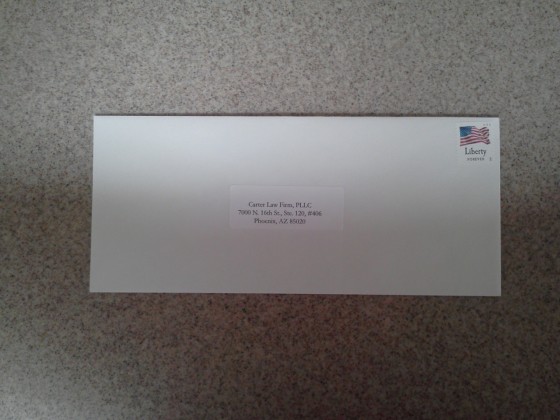
Self-Addressed Unsealed Stamped Envelope Ready for the Mail

Self-Addressed Unsealed Stamped Envelope Ready for the Mail

You get the exclusive rights to copy, distribute, display, perform, and to make derivative works based on your work the second you’ve fixed your work in any tangible medium. (Sorry, there’s no copyright protection for ideas that only exist in your head.) If you want to maximize your rights in your work, including the ability to sue for copyright infringement and collect statutory damages, you need to register your work with the U.S. Copyright Office. You can do it online and most application fees are only $35.

To demonstrate why poor man’s copyright doesn’t work, I recently addressed an envelope to myself and sent it, unsealed, through the mail. I made a video about the result. You can see it below or here.

If you want more information about how you can protect your rights in your work, please contact me or a copyright attorney in your community. You can connect with me on Twitter, Google+, Facebook, YouTube, LinkedIn, or you can email me. You can also subscribe to the Carter Law Firm newsletter.
Please visit my homepage for more information about Carter Law Firm.
How Work Made for Hire Contracts Work

Photographer Devon Christopher Adams at Ignite Phoenix #10, photo by Joseph Abburscato used with permission

Photographer Devon Christopher Adams at Ignite Phoenix #10, photo by Joseph Abburscato used with permission

If you have ever hired a third party to do photography, video work, web design, graphic design, or to create website or marketing materials for your company, you should check your contracts. If you didn’t draft it correctly, there’s a good chance you don’t own the copyright in what they created.

When you hire a freelancer or a company to create this type of content for you, you need a work made for hire contract. This contract should state that the person being hired is a contractor (not an employee) that they are being hired to create a works made for hire, and that you will own the copyright in everything they create under the terms of the contract. This contract needs to be in writing and signed before the contractor begins work on your project.

If you don’t do this, you will not own the copyright in the work. You will only have an implied license to use the work in ways specified in your verbal or written agreement. The contractor will still own the copyright in the work. If you repurpose the work in another way without the contractor’s permission, there’s a chance that you will be infringing on the contractor’s copyright. The contractor could sue you for copyright infringement or force you to buy another license to use the work. They could offer to sell you the copyright in the content too, which basically means, from your perspective, you’ll have to pay for the same work twice.

I work with companies and freelancers on both sides of this issue. I encourage companies to make sure they have a proper works made for hire in place with their contractors and to not let their contractors lift a finger until that contract is signed. I often suggest that they have provision in their contracts that states the contractor will indemnify the company against any infringement claims made against the company because of the contractor’s work. The company should make the contractor cover the attorneys’ fees and any damages if it turns out the contractor ripped off someone else’s work instead of creating the work themselves.

On the flip side, I frequently write contract templates for freelancers to ensure that they understand what rights they are retaining and which ones they are giving up. Many freelancers want contracts that give the hiring party the copyright in their work and that also give the freelancer a license to put a copy of their work in their portfolio so they can use it to obtain other jobs.  Without this license, the contractor can’t use their work in any way without risking violating the copyright that the company now owns, even though they created it.

If you are a freelancer or a company who hires third parties to create content, please contact a copyright attorney to make sure your rights and interests are protected by the terms of your contracts. You can connect with me on Twitter, Google+, Facebook, YouTube, LinkedIn, or you can email me.

You can also subscribe to the Carter Law Firm newsletter.
Please visit my homepage for more information about Carter Law Firm.

No Expectation of Privacy in Public

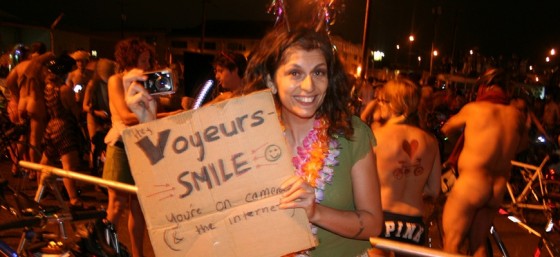
Smile, creeps! by S.mirk from Flickr (photo from the World Naked Bike Ride)

Smile, creeps! by S.mirk from Flickr (photo from the World Naked Bike Ride)

You have no expectation of privacy in anything you do or say in public.

It used to be that if you did or said something in public that you later regretted, you only had to worry about the people who saw you repeating it to others. Now that everyone carries a smartphone, you should act as if someone is taking photos and shooting video of you all the time and that the footage is going to end up all over the internet or on the front page of the newspaper.

That means if you say something racist, belittle at server for making a simple mistake, go to a strip club, or get drunk and make an ass out of yourself, you better be prepared for someone to capture that moment with their phone and share it with everyone on the internet. Once it goes out there, you have no control over who will see it.

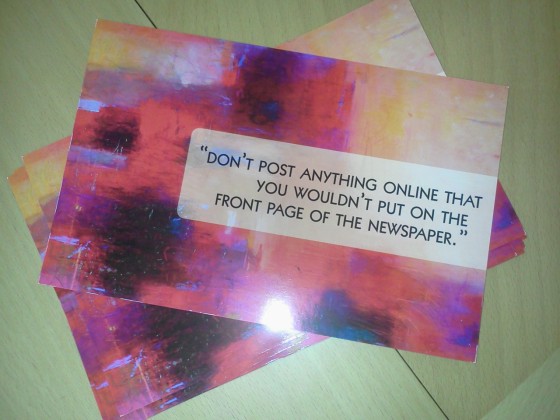
Carter Law Firm's Postcards

Carter Law Firm’s Postcards

When I give talks about social media law I tell people to assume that everything they post online will be seen by their best friend, their worst enemy, their boss, and their mother. If they don’t want one of those people to see something, then they shouldn’t post it. Likewise you should assume that these people will see the footage of anything you do in public.

This rule also applies to situations where you’re in public and you don’t know that someone can see you. If you and your significant other decide to have sex in public – like at a park late at night or on the rooftop terrace of your apartment building – you’re chosing to have sex in plain view of the public. The fact that you didn’t think anyone was watching you does not give you an expectation of privacy.

Some people may order you to stop filming them, including the police. If it’s a situation that is in plain view of the public, they don’t have the right to stop you. There may be issues if you’re stalking or harassing someone, but filming a person one time is unlikely to qualify. There is a law that says it’s illegal to refuse to follow a police officer’s order so in that situation you can decide to comply and go after them later for infringing on your rights or post the footage that you have with the story of them ordering you to stop filming. You could also risk getting arrested by refusing to comply and argue to the court that the officer didn’t have valid grounds for giving you that order.

What about the wiretapping law? Arizona is a one party consent state where only one party to the conversation needs to consent to it being recorded. This prevents third parties from intercepting your phone calls or planting a bug near you to record your conversations. This law will protect you against someone spying on you, but if you’re speaking loudly enough for third parties to hear you, you have no expectation of privacy in your conversation.

One right you do maintain is the right to commercialize your image. If someone takes a photo or video of you in public and is making money off of it, you might have a claim that they are commercializing your image without your consent.

Because we live in a world where people are quick to record everything with their smartphones, think before you act. It’s best to be willing to own everything you do or say in public. That way if anyone ever confronts you with your past behavior in an attempt to humiliate you or tarnish your reputation, you can take the wind out of their sails by owning it. But you better be willing to own anything you do in every situation.

For more information about privacy and the internet, please check out my book, The Legal Side of Blogging: How Not to get Sued, Fired, Arrested, or Killed or my video on this topic.

You can also subscribe to the Carter Law Firm newsletter.
You can connect with me on Twitter, Google+, Facebook, YouTube, LinkedIn, or you can email me.
Please visit my homepage for more information about Carter Law Firm.

New Stance on Blog Copyright Registration

Hey you! by QuinnDombrowski from Flickr

Hey you! by QuinnDombrowski from Flickr

Grrr . . . It seems like every time I call the Copyright Office with a question about blog copyrights, I have to change my stance on how and whether anyone should register their blog’s content. Mind you, when I wrote the Legal Side of Blogging last year, my research and ideas were approved by my cyberspace law professor and another internet/copyright attorney. We all got it wrong.

I used to think that bloggers should register their new content every three months because the Copyright Act says you’re eligible for statutory damages in a copyright infringement lawsuit if you register your work within three months of publication or one month of learning of the infringement – whichever is first. In a previous call to the Copyright Office, the representative said it was permissible to register all your content as one work and that subsequent registrations would be derivative works of the prior ones.

A few months ago I was informed that content that is only available online (including blog posts) doesn’t count as “publications,” so that rule about registering within three months of publication doesn’t apply. For unpublished content, you have to register you work prior to the infringement occurring to be eligible for statutory damages. If you wait until after your work has been stolen to register you work you can only collect actual damages, which will be low unless you or the person who stole your work has a financially successful site.

I called the Copyright Office yesterday and was told that you can’t register posts that are released on different days as one work (though my experience is proof that you can) and you can’t register the same post as an individual work and as part of a larger work, (though I think there’s some wiggle room here).

So here’s my new stance – registering your blog content is not worth it for most people. The exception to this rule is you might want to register your work if you think it will be stolen by someone who can afford to pay potentially hundreds of thousands of dollars in damages and attorneys’ fees. If you’re in this boat, or think you might be, you should submit your application to the Copyright Office before you release the post on your site to ensure that your application will be in before any infringement can occur.

This is more proof of how behind the times the law is and that you can’t apply logic to copyright on the internet. I think it’s moronic that online content isn’t “published” when it’s released on the internet. I think this definition will change in the near future with so many publications switching from paper to being online only. As the law is written and applied the law seems unfair because it makes it harder for online writers to protect themselves.

There is a special copyright registration for “serial works” but so far the Copyright Office says blogs, including those that are released on a strict schedule like other serial publications, do not qualify. I think this is wrong and needs to be challenged.

For now, I’ve added a disclaimer to my ebook on Amazon that states that the copyright registration chapter is inaccurate and will be updated this summer. I hope to add the revised chapter to the book in the next month once it gets through legal review and editing.

How To Trademark a Business Name

Can programming language names be trademarks? by opensourceway from Flickr

Can programming language names be trademarks? by opensourceway from Flickr

Last week a friend asked me if a business could trademark their name. Anyone who’s spent much time with me knows that the answer to every legal question is “It depends.” In this case it depends on whether your business name is trademarkable and if anyone else had claimed the same or a similar name for your category of goods or services.

When you start a business, check the U.S. Patent and Trademark Office (USPTO) database to see if anyone has registered the name you want to use (or a similar one) for selling the same goods and services as you. If someone’s already using the name you want, you will likely be infringing on their trademark rights if you use the name on your products. They could force you to change your name and rebrand if you use the name that someone’s already registered. If you were using the business name on your products and someone registers the name before you, you’ll be in the Burger King situation where you can keep using your name, but only in your established market.

Once you establish that your desired name hasn’t been registered by someone else, you have to look at whether the name you want is trademarkable. Not every business or product name can be a registered trademark. Here are the five types of trademarks.

1. Fanciful Marks: Fanciful marks are words that didn’t exist before you stuck it on your products. Examples include Exxon and Kodak. These marks can be registered with the USPTO main registry.

2. Arbitrary Marks: Arbitrary marks are words in real life, but they are stuck on a product that has no connection to the word. For example, the mark “Apple” for computers, cell phones, and digital music players is an arbitrary mark. The fruit has nothing to do with digital machines and gadgets. These marks can be registered with the USPTO main registry.

3. Suggestive Marks: Suggestive marks are marks where if you think about it, you can make a connection between the mark and the product. “Playboy” as a mark for a men’s magazine is a suggestive mark. These marks can be registered with the USPTO main registry. It’s sometimes hard to discern the difference between suggestive and descriptive marks.

4. Descriptive Marks: Descriptive marks merely describe the product. This includes businesses where the owner names the business after themselves. These marks can be registered on the USPTO main registry after they’ve established “acquired distinctiveness,” which usually means you’ve been using the mark for five years.

5. Generic Marks: Generic marks are the name of the products themselves. It would be if you had an apple orchard and wanted to sell your apples using the mark “Apples.” If the USPTO let you register that mark, no other apple farmers could call their apples “apples” without infringing on your trademark rights. Generic marks can never be registered with the USPTO.

This video may help. You can watch it below or see it here.

If you want to know if your business name can be your trademark and the risks and rewards surrounding registering your mark, contact a trademark attorney in your community.

You can connect with me on Twitter, Google+, Facebook, YouTube, LinkedIn, or you can email me.
You can also subscribe to the Carter Law Firm newsletter.
Please visit my homepage for more information about Carter Law Firm.
Could Amy’s Baking Company Bring Legal Action For Online Comments?

Savouring a soft Scottsdale Sunset by Nelson Minar from Flickr

Savouring a soft Scottsdale Sunset by Nelson Minar from Flickr

So social media blew up this week after Amy’s Baking Company, owned by Samy and Amy Bouzaglo, was featured on Kitchen Nightmares where Chef Ramsey walked away after he felt that the owners of the restaurant were not willing to listen to his critiques. On the show, Amy claimed that the business was hurt by “online bullies” who told lies about them.

After the show aired, the business received national attention and there were several irate posts from the owners on the restaurant’s Facebook pages – one they claim was hacked and the new one they started yesterday.  According to the Phoenix Business Journal, one of the owners’ posts stated they were keeping track of who was commenting and that they “will be pursuing action against you legaly, and against reddit and yelp, for this plot you have come together on. you are all just punks.”

Well, what if Samy and Amy wanted to pursue legal action against people who left comments on their Facebook page, Yelp, or Reddit? What would they claim – infliction of emotional distress? Defamation? For the most part, sharing your opinion is protected by the First Amendment. Yelp and Reddit simply provide forums for others to share but they don’t control the content that is posted, so there’s probably not much they could do in regards to those sites themselves.

What about defamation? In Arizona, defamation requires a false statement about the plaintiff, communicated to a third party, that hurts the plaintiff’s reputation. If Samy and Amy filed defamation claims against anyone who created a post about them or their restaurant, the defendants have three main ways to defend themselves.

Defense #1: There’s no defamation if the statement was true.
If you didn’t tell a lie, there can be no defamation. If you make a statement that only contains your opinion and you told the truth about your thoughts and feelings, there can be no defamation.

Defense #2: The only part of the statement that was false was insignificant.
If the only part of your statement that was false was insignificant, there’s no defamation. For instance, if you write a bad review for a restaurant because you didn’t like their XYZ burger but it turns out you ordered the RST burger, that would be a false statement. If the only thing that wasn’t accurate was the name of the item you ordered, but your review of it was true to your experience, that misstatement would be so minor that it wouldn’t qualify as defamation. The part that was the lie likely didn’t hurt the plaintiff’s reputation.

Defense #3: There was no reputational damage.
This is my favorite of the defamation defenses. Essentially this defense says the plaintiff’s reputation is so bad that there’s nothing you could say that would make it worse. This is a very high bar to clear. I suspect you’d have to make a false statement about a modern day Hitler to have a reputation that’s this bad. In most cases, a person can have a really bad reputation but you could make it worse if you told a lie about them and said they kick puppies or molest children.

According to one of Amy’s Baking Company’s Facebook pages, they will be having a grand re-opening on May 21st. It will be interesting to see the reviews from the people who visit the restaurant that night.

If you suspect you’ve been the target of defamation, please contact an attorney in your community. If you want more information about online defamation and the defamation defenses, please check out my book, The Legal Side of Blogging: How Not to get Sued, Fired, Arrested, or Killed.

You can also subscribe to the Carter Law Firm newsletter.
You can connect with me on Twitter, Google+, Facebook, YouTube, LinkedIn, or you can email me.
Please visit my homepage for more information about Carter Law Firm.
Reddit’s New Privacy Policy – How Terms of Service Should Be Written

Startup Schwag Bag #2 by homard.net

Startup Schwag Bag #2 by homard.net from Flickr

Are you on Reddit? I love Reddit. It’s a great way to connect with the various online communities that matter to you.

Reddit recently announced that its new privacy policy is going into effect on May 15th. You can read the text of the policy here. Seriously, go read it.

What I love about this policy is how simply it is written. It’s straightforward, well organized, and written in English – not legalese. It’s a policy that Joe Average people can read and understand how the site will use their information. I appreciate that Reddit even said that they want their users to read and understand their policies.

Reddit’s approach should be the standard way that lawyers write a company’s terms of service for their clients’ websites. They should be simple, direct, and be organized in a way that it’s easy for users to understand the site’s rules. They don’t need to be excessively long or use words that no one uses in real life.

A website’s terms of service is a contract between the site’s owners and its users. If you disagree with a site’s terms, don’t use the site. It’s important when you join a website where you will be interacting with others or posting content that you understand your dos and don’ts as well as what the site can do with your information and anything you post.

Some people think it’s ok to simply take another website’s terms of service, change the name of the company to their own, and slap it on their website. This is asking for trouble, especially if you don’t understand the terms that you’re copying. You may be creating rules for your users that you don’t want in place. Reading other website’s terms of service is a good place to get ideas if you want to try to draft your own, but it shouldn’t be a substitute for making sure your terms of service reflect your individual or company’s needs. You never know who draft the terms you’re copying.

I love drafting custom website terms of service. I get to combine my client’s needs with what the law allows and come up with a document (in English) that will work for them. I know it sounds boring to some people, but to me it’s like a big puzzle that I get to figure out.

If you operate a website where users get to post content or interact with each other, please make sure you have a solid set of terms of service that fits your needs. If you can’t afford to hire an attorney to draft your terms of service from scratch, at least have one to review your terms of service or pay for a consultation to discuss what your provisions should be in your terms of service.

You can also subscribe to the Carter Law Firm newsletter.
You can connect with me on Twitter, Google+, Facebook, YouTube, LinkedIn, or you can email me.
Please visit my homepage for more information about Carter Law Firm.

Should Star Wars Fans Fear Disney Cease & Desist Letters?

Yoda statue outside Lucasfilm - The Presidio by kennejima from Flickr

Yoda statue outside Lucasfilm – The Presidio by kennejima from Flickr

May 4th is Star Wars Day. May the 4th be with you! In light of this geeky holiday and the fact that I will be speaking about the legalities of fan fiction and fan art at Phoenix Comicon this year, I’ve been thinking about what the impact of the Disney buying Lucasfilm in 2012 will have on Star Wars fans.

George Lucas was known for encouraging fans to create fan art and fan fiction. This is an expression of love for Star Wars and gives fans a chance to connect in new ways. In contrast, Disney is known for sending cease and desist letters when they find that a day care or school shows Disney films or if a child-centered business has a mural of Disney characters painted on the wall.

I tell my fellow geeks who want to create fan art or fan fiction to do their research on whose work they want to emulate to see if the copyright holder will be likely to come after them if they discover what they’ve created. I haven’t heard of any Star Wars fans receiving a cease and desist letter from Disney since they’ve acquired Lucasfilm. I’ve sent a message to Disney corporate office asking about their official policy regarding Star Wars fan art and fan fiction.

If you get a cease and desist letter from Disney for your Star Wars fan fiction or fan art, you could try to make an argument that you’re not committing copyright infringement because what you created is protected by the concept of fair use. This is part of the Copyright Act that permits people to add original and transformative content to existing works. This law protects things like parodies.

Never forget that fair use is a defense, not a permission slip. To make a valid fair use argument, the copyright holder will sue you for infringement and then you’ll have to demonstrate to the court that your work qualifies as fair use. The court will consider four main factors:

  1. Purpose and character of your use of another’s work (Are you transforming the original?)
  2. Nature of the copyrighted work you’re copying
  3. Amount and substantiality of the copyrighted work used
  4. Effect on the market (Is your work a substitute for the original?)

This is somewhat a dangerous quest to take on. The general rule is “Disney never loses” when it comes to legal battles. I know of only person who fought Disney and won in a copyright situation.

If you create fan art or fan fiction or are considering creating original work based on an existing work and need to understand the legal risks that accompany your work, please contact a copyright attorney in your community. You can also check out my book The Legal Side of Blogging: How Not to get Sued, Fired, Arrested, or Killed for my thoughts on fair use.

You can also subscribe to the Carter Law Firm newsletter.
You can connect with me on Twitter, Google+, Facebook, YouTube, LinkedIn, or you can email me.
Please visit my homepage for more information about Carter Law Firm.

FAQs about the Legalities of Social Media

Carter Law Firm's Official Postcard - let me know if you want me to send you one.

Carter Law Firm’s Official Postcard – Let me know if you want me to send you one.

I had the pleasure of speaking at the Public Relations Society of America’s Western District Conference last weekend. I led two sessions: “So you want to do a flash mob” and “The Legal Side of Blogging: 10 Questions to Ask Before you Hit ‘Publish.’” Both sessions were great and I wanted to share some of the frequent questions I get when I talk about the legalities of social media.

What should you do if you’re outsourcing your blog content?
You need a kick ass contract that clearly states who owns the copyright in the content that is created. If the hiring company obtains copyright, does the blogger get permission to put a copy of the work in their portfolio to obtain other work? The contract should also state who is responsible if there are any problems related to the work (i.e., copyright infringement claim) or if there are any disputes related to the contract.

What should you do if you want to use a photo from a company’s site, such as if want to write a positive review of their company?
There’s a chance that using the photo could qualify as fair use; however it’s probably best to avoid the possibility of being hit with a copyright infringement claim by asking the company if you can use their photo. You never know who owns the rights to an image and if there are any restrictions related to using it.

What’s the worst case scenario if you use an image from Google Images without verifying that it was available for use with a Creative Commons license or had been released to public domain?
You could be sued for tens of thousands of dollars for copyright infringement. I always say that just because someone sues you that it doesn’t mean they’re going to win, but in this case, they might. You can still be sued and lose even if you didn’t mean any harm.

I get permission to use every photo on my blogs or use photos that are available under Creative Commons licenses that allow me to modify and commercialize each image.

What if you’ve been using Google Images or you haven’t kept track of what images you’re allowed to use?
Probably no one wants to hear this, but I’d rip every image out of your site and start over, making sure that you own or have permission to use every image on your site.

These are my rules of thumb when it comes to social media:

  • Assume everything you post online will be seen by your best friend, your worst enemy, your boss, and your mother. If you’re not ok with one of those people seeing what you want to say, don’t post it.
  • Don’t post anything online that you wouldn’t put on the front page of the newspaper.

For more information about the legalities of social media, please check out my book The Legal Side of Blogging: How Not to get Sued, Fired, Arrested, or Killed.

You can also subscribe to the Carter Law Firm newsletter.
You can connect with me on Twitter, Google+, Facebook, YouTube, LinkedIn, or you can email me.
Please visit my homepage for more information about Carter Law Firm.