The North Face vs The South Butt Trademark Saga


North Face vs South Butt, Ruth Carter, trademark infringement

The North Face vs The South Butt, photos by TerryJohnston and JL Johnson

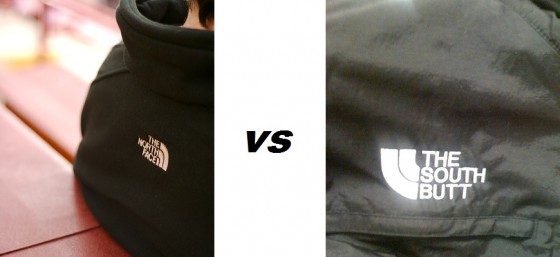
The North Face Apparel Corp. is well-known for their outdoor apparel. When I lived in Oregon, I became quite familiar with their brand. Their tagline is “Never Stop Exploring.” In 2010, The North Face sued The South Butt, LLC for trademark infringement when the company started selling apparel with a similar name, logo, and tagline. The South Butt’s logo uses a similar font as The North Face and incorporates a set of curved lines, similar to The North Face’s log. The South Butt’s tagline was “Never Stop Relaxing.” The South Butt even tried to sell the brand to The North Face for $1 million. When I first saw a South Butt shirt, I thought it was hilarious and I knew it was a parody of The North Face, but I figured it wouldn’t last long on the market.

The two companies settled this dispute with an injunction that prohibited The South Butt from using The North Face’s trademarks or any mark that was similar to The North Face’s without permission. The trademark laws generally prohibit you from unfairly riding another brand’s coattails for your own benefit, confusing consumers about what the quality and source of the good they’re buying, or otherwise damaging another brand’s reputation with your trademark.
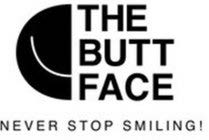
Fast-forward to the summer of 2012, The North Face is back in court asking a judge to hold the owners of The South Butt in contempt. According to the report, the owners of The South Butt started a new company, Why Climb Mountains, LLC, and they are selling apparel under the brand “The Butt Face” with the tagline “Never Stop Smiling.” The logo also features curved lines which are similar to The North Face’s logo.

The North Face is claiming that The South Butt owners are violating the injunction with this new line of apparel. They commissioned a survey that found that 35% of respondents associated The Butt Face logo with The North Face brand. The judge is expected to decide whether The South Butt owners violated the injunction that prohibited them from using a trademark that’s similar to The North Face.

I understand why a company would want to create a parody of an existing company’s brand, but this story makes me wonder, “Why would you do it twice to the same company if you ended up in court the first time around?” On the flip side, this story shows that there is a market for parody brands which, if a company was looking to expand its market, that would be one option to consider.

If you’re considering using a trademark that might be confused with your competitors’, please consult a trademark attorney in your community before you invest too much time and energy into creating that brand.

If you want to hear more of my thoughts on this topic, or if you think this post is too long to read, I made a video.

Feel free to connect with me via Twitter, Google+, Facebook, and LinkedIn, or you can email me.
Please visit my homepage for more information about Carter Law Firm.

Hat tip: JD Supra

Venture Capital Available for Arizona Companies

Money Plant by Tax Credits from Flickr

Money Plant by Tax Credits

Money doesn’t grow on trees . . . but sometimes people want to give it to you! The Invest Southwest Capital Conference is coming up on November 28th-30th at the Fairmont Scottsdale Princess Resort. This is the conference where Arizona companies can pitch their business plans and investment opportunities to over 300 venture capitalists and angel investors.

This conference has resulted in over a quarter of a billion dollars being invested in companies since its beginning in 1992. Jonathan Coury, the chairman of this year’s conference says the event’s mission is to encourage “economic growth through capital investments in growing enterprises.” I’ve known Jonathan since I worked under him and helped launch other businesses at the Innovation Advancement Program at Arizona State University. If he believes in this conference, I believe it’s something local companies should consider if they are trying to get a significant amount of venture capital.

Invest Southwest is geared towards companies that are looking for between $500,000 and $10 million in funding. You must apply to present to the conference. Applications must be received by 5pm on Thursday, August 30th with a $199 application fee. A selection committee will chose between 12 and 15 companies to present at the conference. If you are selected, you must pay an additional $350 presenter fee.  At first glance, $549 might seem like a lot of money to present at a conference, but not compared to the $10 million you might take home with you.

When you are seeking venture capital, it’s best to work with an Arizona business lawyer (like me) who can help you understand your obligations when you accept money from venture capitalists or angel investors.

Feel free to connect with me via Twitter, Google+, Facebook, and LinkedIn, or you can email me directly.
Please visit my homepage for more information about Carter Law Firm.

Avoid Piercing the Corporate Veil

Shadow Theatre by tamadhanaval, Piercing the corporate veil

Shadow Theatre by tamadhanaval

After I published the blog post on starting a business in Arizona, someone asked me if there was anything wrong with using PayPal to accept business payments if their PayPal account is connected to a personal bank account. I cringe when I hear stories like this.

One of the benefits of creating a business entities is it limits your liability. If you have a corporation or an LLC and the business gets sued and loses, the prevailing party can only take the business’ assets if the business is set up properly. They can’t go after your personal home, car, bank accounts, or other possessions.

You get this protection by keeping the business assets and your personal assets separate. Your business needs its own bank account, credit card, etc. You should pay for business expenses with the business accounts and personal expenses with your personal accounts. If you don’t keep your accounts separate and you lose in a lawsuit, the prevailing party could make the argument that the business is not a separate entity but is merely an alter ego for you. If that happens they can take assets from the business and your personal property to collect their damages.

Creating an LLC is a good start to protecting yourself against personal liability, but it may not be enough if you don’t keep your business and personal accounts independent from each other. Services like PayPal are so easy to use that it will be simple to create separate accounts for business and personal use.

If you have questions about whether you’ve properly set up your business to protect yourself against liability, please contact a business lawyer (like me) in your community.

Feel free to connect with me via Twitter, Google+, Facebook, and LinkedIn.
Please visit my homepage for more information about Carter Law Firm.

How To Start a Business in Arizona

National Geospatial-Intelligence Agency Ribbon Cutting by US Army Corps of Engineers, Carter Law Firm, Ruth Carter

National Geospatial-Intelligence Agency Ribbon Cutting by US Army Corps of Engineers

This week I had two speaking engagements on the basics of starting a business in Arizona. I thought I’d expand my list of tips into the ideal timeline an entrepreneur should follow for setting up their business.

  1. Figure out what type of business you want to have.
  2. Select a name for your business. From a trademark registration perspective, it’s best to pick a name that contains a word or words that don’t already exist. Also be mindful of any business name restrictions that exist in your industry.
  3. Do a search on the U.S. Patent and Trademark Office (USPTO) website to see if someone in a similar business has registered a similar name for their business. If they have, they can prevent you from using your desired trade name. Run a Google search as well to see if someone has a similar name but hasn’t registered it with the USPTO.
  4. Create a business entity by sending the appropriate form and payment to the Arizona Corporation Commission.
  5. Open a bank account for your business. Never use your personal accounts for business expenses or your business accounts for personal expenses.
  6. If you have more than one owner, create an operating agreement. This is a contract that dictates how the company is owned, how you will run your business, and how you will resolve problems. You need this no matter who your partners are, including your spouse and family members.
  7. When you have a business, you have intellectual property – at least copyrights and trademarks, and perhaps trade secrets and patentable ideas. Create an intellectual property strategy to protect these things. This is another time when you should at least buy an hour with a lawyer.
  8. Draft contract templates for documents you will regularly use with vendors and customers. Many business owners get contract templates from the internet. This is an acceptable way to start this project, but you should have a lawyer review them to make sure they are legal and address your needs.
  9. Register your trademark with the USPTO.
  10. If you have employees, you will need employment contracts and an employee handbook that includes a social media policy that complies with the National Labor Relations Act.

Ideally, every new business would have a lawyer to help them set up avoid any legal missteps, but many entrepreneurs can’t afford it. There are a lot of things you can do without a lawyer’s help, but you need to be well-informed about what your’e required to do when going into business for yourself and when it’s worth it to pay for a lawyer (like me).

It’s much easier and cheaper in the long run to consult a lawyer a few times when you’re starting your business than to have to hire one to clean up the mess that can result if you do it the wrong way.

Feel free to connect with me via Twitter, Google+, Facebook, and LinkedIn.
Please visit my homepage for more information about Carter Law Firm.

DMCA Takedown FTW: The Follow-up

Don't Steal by Uncleweed, Ruth Carter, Carter Law Firm

Don’t Steal by Uncleweed

Last week I posted a blog about my experience sending a Digital Millennium Copyright Act (DMCA) takedown notice to Google. A few questions have come up since I put up the post, and I wanted to address them.

When I first noticed that another blogger had taken a photo from my blog and posted it on her site, one of my friends asked me why I sent a DMCA takedown notice instead of just sending her an email. That’s a valid question, and an option I considered.  I chose to send a DMCA takedown notice because I’d never sent one before I wanted to experience the process. I had no malicious intent. The blog where the copyright infringement was occurring was taken down in about 24 hours, and the blogger who stole my work changed the image and had the post back up in less than a day after that.

It seems like a lot of people use images they find online without thinking about the potential legal implications. This situation could have been a lot worse. My blog is not currently registered with the U.S. Copyright Office, but that’s on my to-do list. If I registered my blog and sued for infringement in this situation, I would only be eligible for my actual damages, which is probably nothing.

If you steal an image from a blog that was registered with the U.S. Copyright Office within 3 months of publication or 1 month of learning of the infringement (whichever happens first), you could be sued for copyright infringement and ordered to pay the copyright owner’s statutory damages and attorneys’ fees. In the worst case scenario, you could be ordered to pay up to $150,000 in damages plus attorneys’ fees.

So what’s the take home lesson? Be thoughtful about the images you use on your blog. Only use images that are available under Creative Commons. If there’s an image that you want to use that doesn’t come with a Creative Commons license, get permission from the copyright owner to use the image.

Feel free to connect with me via Twitter, Google+, Facebook, and LinkedIn.
Please visit my homepage for more information about Carter Law Firm.

DMCA Takedown FTW

Poolside Studying, Ruth CarterI think I do a decent job monitoring my blogs with my sites’ widgets and Google Analytics. I like to see where my readers live and how they ended up on my sites. When I see that someone got to my blog from a site that’s unfamiliar to me, I try to find the post that linked to my site to see what it said.

Poolside Studying, Ruth Carter

This is the image that was stolen from The Undeniable Ruth

This week, someone got to The Undeniable Ruth via a blog on BlogSpot. I checked out that blog and found that the blogger didn’t write a post that referred to me or a topic I’ve written about. She copied an image from my post about studying in the pool. She mentioned the name of the post she got the image from, but she didn’t ask my permission to use the image or even give me an attribution. Unfortunately for her, she copied one of the few images that I personally took with my camera phone and own the copyright to it. I decided to send a Digital Millennium Copyright Act (DMCA) takedown notice to Google, which owns BlogSpot.

The DMCA is a law that provides a safe harbor to companies that don’t control the content on their sites. They have to remove or disable access to the infringing material when they receive a DMCA takedown notice or else they can be liable for copyright infringement. To qualify for protection under the DMCA, you have to register a designated agent with the U.S. Copyright Office. This is the person you send the takedown notice to.

Google has a DMCA agent, so I sent them a takedown notice to get my picture taken off BlogSpot. A takedown notice is a simple letter that must include the following:

  1. Your physical or electronic signature,
  2. The identity of your work that is allegedly being infringed,
  3. The specific URL for the website where the infringement is occurring,
  4. Your contact information (i.e., your address, telephone number, and/or email address),
  5. A statement that you have a good faith belief that the material violates the law or the copyright owner’s rights, and
  6. A statement, under penalty of perjury, that the notice is accurate.

I emailed my takedown notice to Google yesterday and I got a response today that informed me that the post was taken down. I tried to visit the BlogSpot post where my photo was published, and verified that the blog post was taken down. I thought they were only going to remove the photo. She can put the post back up if she wants, just not with my picture.

If you create content, it important to keep an eye on your analytics so you can detect when someone steals your work. I was pleased to see that the DMCA takedown process was fast and easy and that Google was responsive to my notice.

If you detect someone’s stolen your content, consult an attorney to determine your options for recourse.

Feel free to connect with me via Twitter, Google+, Facebook, and LinkedIn.
Please visit my homepage for more information about Carter Law Firm.

Can I Publish an Email in a Blog Post?

Letter of Intent by Nick Ares, Ruth Carter, Carter Law Firm

Letter of Intent by Nick Ares

My friend in California recently contacted me and said that he received an email from a professional association he belong to and that he wanted to share it in a blog post along with his response. As an Arizona attorney, I can’t provide legal advice to California clients, but it made me think about what potential legal repercussions I could face if I wanted to publish an email in a blog.

Defamation
Defamation usually involves making a false statement about a person or entity to a third party that damages their reputation. Publishing a blog post is definitely a communication to a third party, but there’s no false statement if you publish the email as it was written and if your response contains your true reaction to the message.

Public Disclosure of Private Facts
Public disclosure of private facts is an invasion of privacy claim where you tell the truth about a person but you release information that a reasonable person would expect you to keep confidential and they would be highly offended if you shared it. This is the type of claim you could face if you break up with your significant other and release the sex tape you made during your relationship.

In terms of publishing an email I received, I’d review the message and the association’s rules to see if communications need to be regarded as confidential. If not, I probably wouldn’t hesitate to republish it in a blog because there’s probably nothing in it that would be high offensive to share with others.

False Light
False light is a claim where you’re accused to telling the truth about someone but you manipulate it in a way that suggests something that is false. If I were going to republish an email, I’d probably publish the entire message to avoid being accused to manipulating the message to make the person look worse than they are.

These legal claims are all state law claims. If I publish an email written to me by a person or on behalf of an organization and they get pissed at me, they’re going to sue me where they live. I’d have to check the exact verbiage of these laws in that state, not just my home state. I prefer  to not set myself up to be sued across the country and have to go there to defend myself.

EDIT: My lawyer friend reminded me of one more claim you have to think about if you’re going to publish an email in a blog post: Copyright Infringement.
The person who wrote the email likely has copyright rights in their verbiage, include the right to decide where it’s reproduced and displayed. Most people don’t register their copyrights with the U.S. Copyright Office, so if you wait three months to publish your blog post, they can only come after you for their actual damages, which will probably be lower than statutory damages. In some cases, they could still get a decent settlement.

And as always, if you’re going to push the envelope with your blog posts, it’s easier and cheaper to consult a lawyer (like me!) in advance than to have to hire one after you’ve been sued and you have to defend yourself.

Feel free to connect with me via Twitter, Google+, Facebook, and LinkedIn.
Please visit my homepage for more information about Carter Law Firm.

I <3 The Oatmeal

Oatmeal Porridge by Alpha

Oatmeal Porridge by Alpha

I want to use this week’s post to voice my support for Matthew Inman, aka The Oatmeal. He draws comics that make me laugh so hard, especially the ones about real life situations. I can always count on him to lift my mood. I saw him at his book signing at Changing Hands in Tempe, and he’s the sweetest guy.

Matthew Inman by Gary BarberFor those of you who haven’t been following the story, Oatmeal was recently threatened with a lawsuit if he didn’t pay FunnyJunk LLC $20,000. FunnyJunk is a website where people can post humorous photos and it apparently it was hosting hundreds of Oatmeal’s images in violation of his copyright. Oatmeal wrote a post about what was happening and accused FunnyJunk of making $100,000+ off his work. FunnyJunk claimed this was a false accusation of willful copyright infringement.

Some people might be been scared by the threat of a lawsuit, but not Oatmeal. He published an awesome blog where he refused to pay the $20,000 and instead announced that he’d try to raise $20,000 for charity in a venture called Operation BearLove Good, Cancer Bad. Oatmeal ended up raising over $200,000 for charity and was sued by FunnyJunk’s lawyer in the process. Hopefully that case will be dismissed soon and Oatmeal can disseminate the funds.

As a lawyer I initially cringed when I saw Oatmeal’s plan, but I was relieved when I saw that he has an awesome lawyer who appears to be doing the appropriate lawyer things on Oatmeal’s behalf. I think Oatmeal’s grace and strength in the face of adversity is admirable. I think if you feel you’re being unjustly accused of a wrongdoing, you should stand up for yourself and not do whatever you have to do to make the threat go away. I applaud Oatmeal for addressing this situation very publicly and showing his opposition a lot of respect.  When Oatmeal’s fans starting calling FunnyJunk’s lawyer, he told them to stop and to donate to Operation BearLove Good, Cancer Bad if they wanted to help.

Much love to you Oatmeal! Thank you for demonstrating the power and influence you can use for good when you build a solid following by doing excellent work. Your hilarious comics and charming personality made you what you are and I’m so glad you didn’t back down from this fight. I hope your legal troubles are resolved soon.

Phoenix Comicon Badge Art Being Ripped Off

Phoenix Comicon 2012 Badge Ruth Carter

Picture from my 2012 Phoenix Comicon Badge

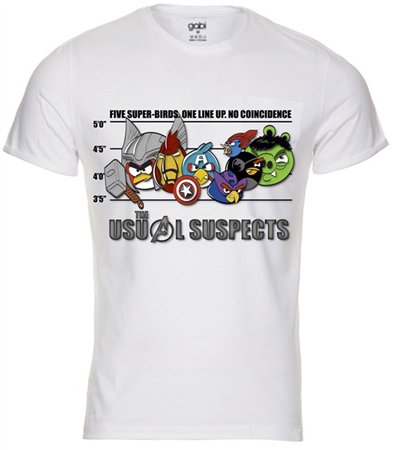
I recently wrote a post about copyright, fair use, and fan fiction and I did an analysis of Marty Freetage’s artwork that was on the badges for Phoenix Comicon this year. It was an awesome parody of Angry Birds and The Avengers. Parodies are generally permissible under the fair use doctrine and I thought Marty’s work was original enough that the copyright holders for Angry Birds and The Avengers probably wouldn’t come after him or Phoenix Comicon for copyright infringement.

Shirt on Gabilife.com

This week I was surprised to see a t-shirt for sale on Gabilife that looks exactly like Marty’s picture. A lot of people on Facebook posted that Gabilife used Marty’s work, changed the background, and stuck it on a shirt. Whoever owns the copyright in the badge art has good reason for believing that their Gabilife is infringing on their work.

This story gets more complicated by Gabilife claims to be a company in India. It raises the question of what are the possible recourse options to make them stop selling the shirt. If they have a presence in the United States, whoever owns the copyright could go after Gabilife for infringement as if they were a US-based company.

Gabilife’s terms state “Pursuant to Title 17, United States Code, Section 512(c)(2), notifications of claimed copyright infringement under United States copyright law should be sent to Service Provider’s Designated Agent.” I searched the agent list on the US Copyright website and I didn’t see a listing for Gabilife or Gabi. That makes me wonder if they just copied someone else’s terms and conditions without registering an agent.

If owned the copyright for the original badge art, I’d register the copyright in the artwork immediately. A copyright holder maximizes their options for recourse if they register their copyright within 3 months of publication or 1 month of learning of the infringement, whichever happens first. If this art hasn’t been registered, that window could still be open.

If the work was registered in time, I’d sue them for copyright infringement if it was a US company. If the company doesn’t do business in the US, there’s probably no point to suing them. If suing them would be pointless, I’d either send a DMCA takedown notice to the email address listed on their site and to their snail mail address. If I wanted to be really bold, I would send them a licensing agreement and a bill that states that they agreed to the licensing agreement by using the artwork without permission.

I wouldn’t expect them to pay me, but it would be validating.

So what is the take away message?

  1. Register your copyrights shortly after creating an original work, especially when you’re as awesome as Marty.
  2. If you suspect someone is ripping off your work, contact a copyright attorney in your community (like me!) to help you strategize and execute your response.

Feel free to connect with me via Twitter, Google+, Facebook, and LinkedIn.
Please visit my homepage for more information about Carter Law Firm.