
Networking Should Be Fun

The Other Side of the Trampoline by Peter Werkman from Flickr

The Other Side of the Trampoline by Peter Werkman from Flickr

If you’re a business owner, networking is part of your job. It’s a significant part of my job. I attend two to four events to shake hands and kiss babies every week. My goal at each of these events is to make connections and build relationships with other professionals in my community.

Because my goal is to create relationships, I prefer to network in smaller groups and one-on-one than at large networking events. Larger events tend to be loud, crowded, and you never know who you’re going to meet. You may meet some interesting people at these events but it also feels like it would be easier to find a needle in a haystack than to find the people you really want to meet. I prefer personalized introductions and specialized networking events like those geared towards entrepreneurs, social media professionals, local business owners, artists, and my fellow legal eagles.

Most of the time, a networking meeting involves meeting for coffee. Coffee is fine, especially from awesome independent shops like Luci’s and Lux. (The last cup of coffee I had at a Starbucks was so vile it made me never want to go there again.) I’ve networked so much that I’m a little coffeed out and I’m looking to change it up a bit.

I’m a big believer that if you don’t love your job, you should change it. In that spirit, I want to make networking more fun. Networking is really about making connections by sharing information and ideas between people. The location is simply the forum. So why not make it a fun-based experience?

I recently invited my email list to meet me for ice cream (ICE KREM!) instead of coffee this summer. Come on – it’s freakishly hot in Phoenix. We should have something refreshing. Besides ice cream, I’d love to network over a game of cards or Skip-Bo. For people who are a more adventurous we could go bowling or hit my favorite trampoline playground. I would be happy to meet with people before attending a book signing at Changing Hands or a movie screening by the AZ Tech Council or wander around the Phoenix Art Museum on a Wednesday night when it’s open to the public for free.

When the weather cools down, I think it would be fun to meet people while feeding the fish at the Japanese Friendship Garden, wandering around First Friday, or taking our dogs to the dog park.

So, if you are a professional networker who wants to kick the experience up a notch and you work in the same circles as me, drop me a line. Of course, if I find you unbearable or you hit me with a hard sell, I will assume you don’t understand the real purpose of networking and invoke the Law of Two Feet.

You can connect with me on TwitterGoogle+FacebookYouTubeLinkedIn, or you can email me. You can also subscribe to the Carter Law Firm newsletter.
Please visit my homepage for more information about Carter Law Firm.

How To Trademark a Business Name

Can programming language names be trademarks? by opensourceway from Flickr

Can programming language names be trademarks? by opensourceway from Flickr

Last week a friend asked me if a business could trademark their name. Anyone who’s spent much time with me knows that the answer to every legal question is “It depends.” In this case it depends on whether your business name is trademarkable and if anyone else had claimed the same or a similar name for your category of goods or services.

When you start a business, check the U.S. Patent and Trademark Office (USPTO) database to see if anyone has registered the name you want to use (or a similar one) for selling the same goods and services as you. If someone’s already using the name you want, you will likely be infringing on their trademark rights if you use the name on your products. They could force you to change your name and rebrand if you use the name that someone’s already registered. If you were using the business name on your products and someone registers the name before you, you’ll be in the Burger King situation where you can keep using your name, but only in your established market.

Once you establish that your desired name hasn’t been registered by someone else, you have to look at whether the name you want is trademarkable. Not every business or product name can be a registered trademark. Here are the five types of trademarks.

1. Fanciful Marks: Fanciful marks are words that didn’t exist before you stuck it on your products. Examples include Exxon and Kodak. These marks can be registered with the USPTO main registry.

2. Arbitrary Marks: Arbitrary marks are words in real life, but they are stuck on a product that has no connection to the word. For example, the mark “Apple” for computers, cell phones, and digital music players is an arbitrary mark. The fruit has nothing to do with digital machines and gadgets. These marks can be registered with the USPTO main registry.

3. Suggestive Marks: Suggestive marks are marks where if you think about it, you can make a connection between the mark and the product. “Playboy” as a mark for a men’s magazine is a suggestive mark. These marks can be registered with the USPTO main registry. It’s sometimes hard to discern the difference between suggestive and descriptive marks.

4. Descriptive Marks: Descriptive marks merely describe the product. This includes businesses where the owner names the business after themselves. These marks can be registered on the USPTO main registry after they’ve established “acquired distinctiveness,” which usually means you’ve been using the mark for five years.

5. Generic Marks: Generic marks are the name of the products themselves. It would be if you had an apple orchard and wanted to sell your apples using the mark “Apples.” If the USPTO let you register that mark, no other apple farmers could call their apples “apples” without infringing on your trademark rights. Generic marks can never be registered with the USPTO.

This video may help. You can watch it below or see it here.

If you want to know if your business name can be your trademark and the risks and rewards surrounding registering your mark, contact a trademark attorney in your community.

You can connect with me on TwitterGoogle+FacebookYouTubeLinkedIn, or you can email me.
You can also subscribe to the Carter Law Firm newsletter.
Please visit my homepage for more information about Carter Law Firm.
Publishing Contracts: Copyright Assignment vs Copyright License

The best analogy for copyright is a jar of markers where each marker represents one of your rights - 10 things: Sharpies by Crystl from Flickr

The best analogy for copyright is a jar of markers where each marker represents one of your rights – 10 things: Sharpies by Crystl from Flickr

I had the pleasure of speaking about the legalities of publishing at Changing Hands Indie Author Conference on February 9, 2013. My session covered the basics of copyright, the importance of registering your copyrights and publishing contracts. I wanted to do a recap of the two types of publishing contracts from a copyright perspective: copyright assignments and copyright licenses.

A copyright is the rights you get in your work. Your rights are created the instant you have an original work of authorship fixed in a tangible medium. As the copyright holder, you have the exclusive right to copy, distribute, display, perform, and make derivative works based on your original work. If you want to let someone publish your work, you need a copyright assignment or a copyright license. This should be a signed contract between the parties and it should be explicit about the rights you’re giving up (if any) and what you will get in return.

Copyright Assignment
When you give someone a copyright assignment, you give them your copyright. When you have a copyright assignment, you do not own your copyright anymore; the other party does. If you publish your work after you assign it to someone, you will be committing copyright infringement, even though you were the original author of the work. Some publishers require you to assign your copyright to them or else they won’t publish your work.

If you give someone a copyright assignment and you later regret the decision, you have to buy your copyright back from them. I know at least one artist who sold the copyright in his work and later purchased it back because it was more lucrative for him to control it.

Copyright License
If you grant someone a copyright license, you retain ownership of your copyright and you give the other party permission to use some or all of your copyright rights. You may grant a publisher the rights to publish your work in print and/or as an ebook but retain the right to create an audio version of your work. J.K. Rowling retained her internet rights to the Harry Potter series when she negotiated her contract with her publishers, which is why she could create Pottermore.

If you license your work, the license should explicit state whether the license is exclusive or non-exclusive, time-limited or perpetual, and clearly state how you will be compensated for granting the other party the license.

Publishing contracts are complicated and it’s best to have a lawyer review the contract before you sign it to ensure you understand what rights you’re giving up and what rights you get to keep. As always, if there’s a portion of a contract that you don’t understand, don’t sign it.

I also created a video this week about the difference between copyright assignments and copyright licenses here.


You can connect with me via TwitterGoogle+FacebookYouTube, and LinkedIn, or you can email me.
Please visit my homepage for more information about Carter Law Firm.

How To Get a Free Consultation with Ruth Carter

Photo by Don McPhee

Photo by Don McPhee

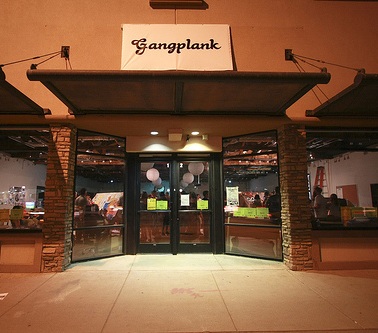
I’m excited to share that I’ve teamed up with Gangplank in Chandler to offer free legal mentoring services on the first Monday of the month from 1pm until 4pm. I can see 3 people for 45-minutes each every month at no charge.

Hello Beautiful by Gangplank HQ from Flickr

Hello Beautiful by Gangplank HQ from Flickr

My legal mentoring hours are a great opportunity to informally bat around your ideas and questions about your projects and business. Coming to my mentoring hours does not create an attorney-client relationship between us. We won’t have any ongoing obligations to each other unless we decide to create a formal working relationship.

Gangplank provides free collaborative workspaces in Arizona, Virginia, and Canada. They provide the physical and social infrastructure for creative people to launch their startups. These are wonderful places for freelancers and new business owners to work. In Arizona, Gangplank has locations on Chandler, Avondale, and Tucson.

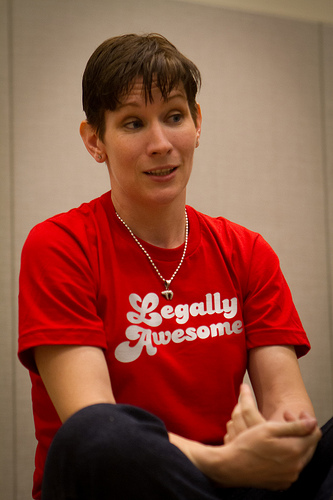
I love working with Gangplank. They have a fantastic group of dynamic people who have an enormous amount of creativity and drive. They have a very informal environment and they do incredible work. It fits brilliantly with my desire to be the approachable lawyer who wears t-shirts.

Skulls & Stripes by Gangplank HQ from Flickr

Skulls & Stripes by Gangplank HQ from Flickr

Gangplank in Chandler is located at 260 South Arizona Avenue. Their events calendar shows their mentors’ availability and also all their other events like their weekly brown bag presentations, hacknights, and workshops. They have a wealth of other mentors too who provide assistance in the areas of business, leadership, marketing, design, finance, and technology.

Gangplank is in charge of scheduling the mentoring hours so please check their event calendar for my availability. You can book a mentoring appointment with me by emailing them at chandler@gangplankhq.com.

Please note: my mentoring hours at Gangplank are not for my ongoing clients with whom I’ve created an attorney-client relationship. These appointments are for people who think they might need a lawyer, people who just want some general legal information, law students, anyone else who wants to chat for an hour.

You can connect with me via TwitterGoogle+FacebookYouTube, and LinkedIn, or you can email me.
Please visit my homepage for more information about Carter Law Firm.

Carter Law Firm’s Top 10 Posts From 2012

Fun with leftover sparklers #10 by yahtzeen from Flickr

Fun with leftover sparklers #10 by yahtzeen from Flickr

It’s been an amazing first year at Carter Law Firm! Thank you to everyone who made it so wonderful. According to my analytics, these were the most popular posts from this year. Enjoy!


Speaking at Phoenix Comicon 2012, Ruth Carter photo by Devon Christopher Adams

Speaking at Phoenix Comicon 2012, photo by Devon Christopher Adams

When Can Someone Post Photos Of You Online

What’s Up With The Disclaimers On Facebook

How To Respond If An Interviewer Asks For Your Facebook Password

How To Start A Business In Arizona

Woman Attacks Camera Man On Camelback

Copyright Infringement On Pinterest

Avoid Piercing The Corporate Veil

Creative Commons Images For Your Blog

The North Face vs The South Butt Trademark Saga

I’m An ABA Legal Rebel!

Have a great new year everyone! I’m excited for what’s to come and sharing it with you.

You can connect with me via TwitterGoogle+Facebook, and LinkedIn, or you can email me.
Please visit my homepage for more information about Carter Law Firm.
Celebrity Trademark Woes

Ivy Leaves by D H Wright from Flickr

Ivy Leaves by D H Wright from Flickr

In the last week there have been a few stories about celebrities running into trouble with prospective trademarks. I thought I’d break down the two major stories I’ve heard.

Blue Ivy
Jay-Z and Beyonce had a daughter earlier this year and named her Blue Ivy Carter. (Why do celebrities give their kids such stupid names?) According to the news report, Jay-Z filed an application to trademark her name within days of her birth. It seems very strange to me that a high priority of a new parent is starting a product line based on their kid’s name.

To have a trademark, you have to select a mark and the product or service you’re going to use it with. A mark can be anything that will differentiate your product or services from the competition – a word, a tag line, a color, a scent, a sound, etc. Its purpose is to inform consumers about the source and the quality of the goods they’re buying. Once you register a mark with the U.S. Patent and Trademark Office, no one can use a similar mark on similar goods and services because it might lead to consumer confusion.

Jay-Z’s trademark plan hit a bit of a snag. When he applied for the trademark, he was likely informed that there are several registered trademarks featuring the phrase “blue ivy.” One is an event and wedding planning service, another is an online furniture retailer, and another is a retail store that sells clothing, jewelry, accessories, and giftware.

Jay-Z and Beyonce could register “Blue Ivy Carter” as a trademark, but not to sell a good or service that was similar to one of the existing registered marks. It appears they’ve registered the mark for skin care products, baby products, ring tones, key rings, and accessories among other things. The list is disgustingly extensive.

The best part of the trademark record is where it says, “The name ‘BLUE IVY CARTER’ identifies a living individual whose consent is of record.” That’s funny.

Khroma
The other trademark story I heard recently involves the Kardashians. Apparently they plan to release a makeup line called Khroma Beauty that is expected to be sold in Sears and CVS Pharmacies. The problem they’re running into is the fact that there’s a salon called Chroma Makeup Studio in Hollywood that sells its own Chroma brand of makeup. I couldn’t discern in a quick search if the studio owner had registered the trademark.

The general rule in trademark is that it’s not enough to have a different spelling of the same word as your competition’s mark. For example, if someone owed an “Alligator Furniture Store” in your city, you probably couldn’t open a competing store called “Allig8tor Furniture.”

Even without registration, the owner of the Chroma mark gets the exclusive rights to use his mark in commerce wherever the market has been established. If nothing else, he might have a valid argument to keep Khroma makeup out of the stores near his studio. He’s asked the Kardashians to change the name of their makeup.

When selecting a potential mark, it’s a good idea to check the U.S. Patent and Trademark Office to see if someone has already registered the mark you want to use on similar goods and services. If they are, you’ll have to pick a new trademark.

It’s also prudent to run a simple Google search to see if someone is using the mark in commerce without registering it. If they are, you’ll have to consider whether it would be better to pick something new or use a similar mark knowing that the other user has the exclusive right to use the mark where they’re established. If you register your similar mark, you can use it everywhere in the country except the areas where your competition established itself prior to your registration.

Feel free to connect with me via TwitterGoogle+Facebook, and LinkedIn, or you can email me.
Please visit my homepage for more information about Carter Law Firm.

Is Your Non-Compete Agreement Enforceable?

Spider-Man vs. Batman by JD Hancock, Non-compete Agreements

Spider-Man vs. Batman by JD Hancock

When you started your job, did you read your employment agreement before you signed it? What about the employee handbook – did you read it or just sign the form that says you read it? There’s a good chance one of those documents contained a non-compete agreement (NCA).

NCAs are a necessary evil, especially in this day when employees are less likely to stay at a company for their entire careers. These are contracts that restrict your ability to work in a similar position for a specified amount of time and geographic area if you leave the company.

When someone’s thinking of leaving their job, they often review their NCA and ask if it’s valid. A lot of companies won’t hire you if it would violate your NCA. If you think your NCA is invalid, you can go to court and ask a judge to invalidate it.

The court will have a hearing and weigh your interests against your employer’s. On one hand your employer doesn’t want to train someone and give them access to company information to lose them to their direct competition.  On the other hand, you have a right to choose where you work and you shouldn’t become unemployable because of a NCA.

The validity of a NCA is governed by state laws and decisions from previous court cases. There was a great article in the September edition of Arizona Attorney Magazine by David Bray and David Ferrucci about the enforceability of NCAs. Here are some of the highlights.

Courts generally want NCAs to have clear and reasonable provisions. If your NCA can interpreted in two ways – one that narrow and enforceable one that is overly broad and unenforceable and in the ex-employee’s favor – the court will usually rule in that it’s too broad and thus unenforceable. The court will look at whether you negotiated your NCA. Many new hires are given a nonnegotiable NCA as part of their employee handbook and they can either accept it as written or work somewhere else. If the NCA was negotiated, the court will be more likely to try to determine the parties’ intent when they wrote the contract.

There’s also something called the blue-pencil rule in Arizona. This allows a court to excise “grammatically severable” and unreasonable provisions from a contract but keep the reasonable provisions. This keeps the whole contract from being invalid because of one invalid provision.

You can also have step-down provisions in the contract.  An example of this would be, “This non-compete agreement will be in place for 12 months after the employee leaves the company. If a court finds this duration to be invalid, then the duration will be 9 months. If a court finds this duration to be invalid, then the duration will be 6 months.”

A valid step-down provision will only have 2 or 3 choices and be written in good faith. A 2006 Arizona case said that good faith step-down provisions must be:

  1. Definite,
  2. Consistent with the underlying provision,
  3. Easily severable from unreasonable provisions,
  4. Have a narrow duration range, and
  5. Have a reasonable geographic scope.

A valid NCA might result in you not being able to work for a direct competitor or in the physical vicinity of your previous employment, but your skills are likely transferable to other jobs or you can do the same job if you’re willing to do it far enough away from your previous employer.

Read your employment contract carefully. If you’re an employee, get a copy of it before your first day on the job so you can review it and possibly have a business lawyer review it. If you’re an employer, hire a lawyer to write your NCA for you so a court will be less likely to rule that it’s overly broad or otherwise invalid.

One word of caution: In contract cases, Arizona is a “loser pays” state. If you go to court to dispute a NCA and you lose, you’ll be paying for your attorney and the other side’s attorney.

Feel free to connect with me via TwitterGoogle+Facebook, and LinkedIn, or you can email me.
Please visit my homepage for more information about Carter Law Firm.

Employers Can’t Control Personal SM Accounts

i love my job by peretzpup

i love my job by peretzpup

Last week a friend of mine asked about if employers can require employees to do anything with their social media accounts. Apparently, his friend’s employer asked the employees to change the cover photos and avatars on their Facebook pages to some type of advertising for the company.

If a company wants to be involved in social media, they need to create their own accounts on Facebook, Twitter, and any other site where they want to have a presence. They should also have crystal clear contracts with the employees and/or businesses who manage these accounts that state how they should be used, who will own the intellectual property on the sites, and who will own the accounts and followers if the employee leaves or changes positions or if the company hires another company to manage their social media.

Back to employers telling employees what to do on their personal accounts – your personal Facebook account is your personal property. Your employer can prohibit you from being on your personal accounts during work hours or work computers and they can discipline you for violating your employment contract on it (as long as it doesn’t violate the NLRA). But to require you to promote the company on your personal page? That would be a big “Oh hell no.”

I checked out Facebook’s terms of service and they clearly state you must use Facebook Apps for all promotions and that you will not use “your personal timeline for your own commercial gain (such as selling your status update to an advertiser).” If your employment is contingent on promoting the business on your personal account, I see a valid argument that you essentially sold your part of your timeline to your employer.

On the other hand, companies want their employees to be happy in general and want them to support the product. I see no problem in companies making images available if employees wanted to voluntarily change their profile photos. I think it would be awesome if the company allowed employees to take pictures of themselves with a company mural or sign to use in social media if they were so inclined. This would have to be completely voluntary with no consequences, positive or negative, based on employee participation.

I’m a big proponent of employers leaving employees alone when it comes to their personal time and social media accounts as long as the employees aren’t violating company policies. If you think your employer is asking you to do something questionable with your social media accounts, check the website’s terms of service and consult a social media attorney (like me) in your community.

Feel free to connect with me via TwitterGoogle+Facebook, and LinkedIn, or you can email me.
Please visit my homepage for more information about Carter Law Firm.
Avoid Piercing the Corporate Veil

Shadow Theatre by tamadhanaval, Piercing the corporate veil

Shadow Theatre by tamadhanaval

After I published the blog post on starting a business in Arizona, someone asked me if there was anything wrong with using PayPal to accept business payments if their PayPal account is connected to a personal bank account. I cringe when I hear stories like this.

One of the benefits of creating a business entities is it limits your liability. If you have a corporation or an LLC and the business gets sued and loses, the prevailing party can only take the business’ assets if the business is set up properly. They can’t go after your personal home, car, bank accounts, or other possessions.

You get this protection by keeping the business assets and your personal assets separate. Your business needs its own bank account, credit card, etc. You should pay for business expenses with the business accounts and personal expenses with your personal accounts. If you don’t keep your accounts separate and you lose in a lawsuit, the prevailing party could make the argument that the business is not a separate entity but is merely an alter ego for you. If that happens they can take assets from the business and your personal property to collect their damages.

Creating an LLC is a good start to protecting yourself against personal liability, but it may not be enough if you don’t keep your business and personal accounts independent from each other. Services like PayPal are so easy to use that it will be simple to create separate accounts for business and personal use.

If you have questions about whether you’ve properly set up your business to protect yourself against liability, please contact a business lawyer (like me) in your community.

Feel free to connect with me via TwitterGoogle+Facebook, and LinkedIn.
Please visit my homepage for more information about Carter Law Firm.